


Sunglass Frame Measurements: UAE Buyer's Cheat Sheet
In practice, most poor sunglass fits trace back to one habit: the buyer never read the numbers printed inside the temple. A pair that looks perfect on screen can sit too low on your nose, pinch behind your ears, or leave a gap at the cheekbone that lets glare in from the side. Understanding sunglass frame measurements takes about two minutes and removes most of the guesswork, especially when you are buying online and cannot try the frame on before it reaches your door. This cheat sheet explains each number, shows you how to measure a pair you already own, and gives you a practical way to choose a size for UAE sun and heat.
Table of Contents
- Quick Takeaways
- The Three Numbers on Your Temple
- Measuring a Pair You Already Own
- Bridge Width and Your Nose
- Lens Width and Face Shape
- Comparing Fit Methods
- Fit for UAE Sun and Heat
- Ordering Online With Confidence
- Frequently Asked Questions
- References
Quick Takeaways
| Key Insight | Explanation |
|---|---|
| Read three numbers, always in the same order | Lens width, bridge width, then temple length, all in millimeters. A printed sequence such as 50 20 150 means a 50 mm lens, a 20 mm bridge, and a 150 mm temple. |
| Lens width is the first number | It sets how much of your eye area the lens covers, and it is the figure most buyers compare first, which is why it should not be the only one you check. |
| Bridge width decides how the frame rests | Ray-Ban lists typical bridge widths from 12 to 26 mm. A bridge that is too narrow rests on the upper nose, and one that is too wide slides down. |
| Temple length controls comfort behind the ear | Arms that are too short press against the head, and arms that are too long let the frame drift and tilt. |
| Measure a well-fitting old pair when labels are gone | Lay the frame on a ruler, measure the lens width and bridge gap, then match those figures when you shop. |
| Start with standard size if you have no history | Ray-Ban states that standard size is the correct one for more than 90% of its customers, so it is a sensible default for a first pair. |
The Three Numbers on Your Temple
Open any designer pair and look at the inside of the left temple, the arm that rests behind your ear. You will usually find three numbers, although some frames print only the first two. Ray-Ban's own size guide uses the example 50 20 150 to explain the layout, and the same logic applies whether you are looking at Prada, Dior, Emporio Armani, or Porsche Design, although each house has its own printing conventions.
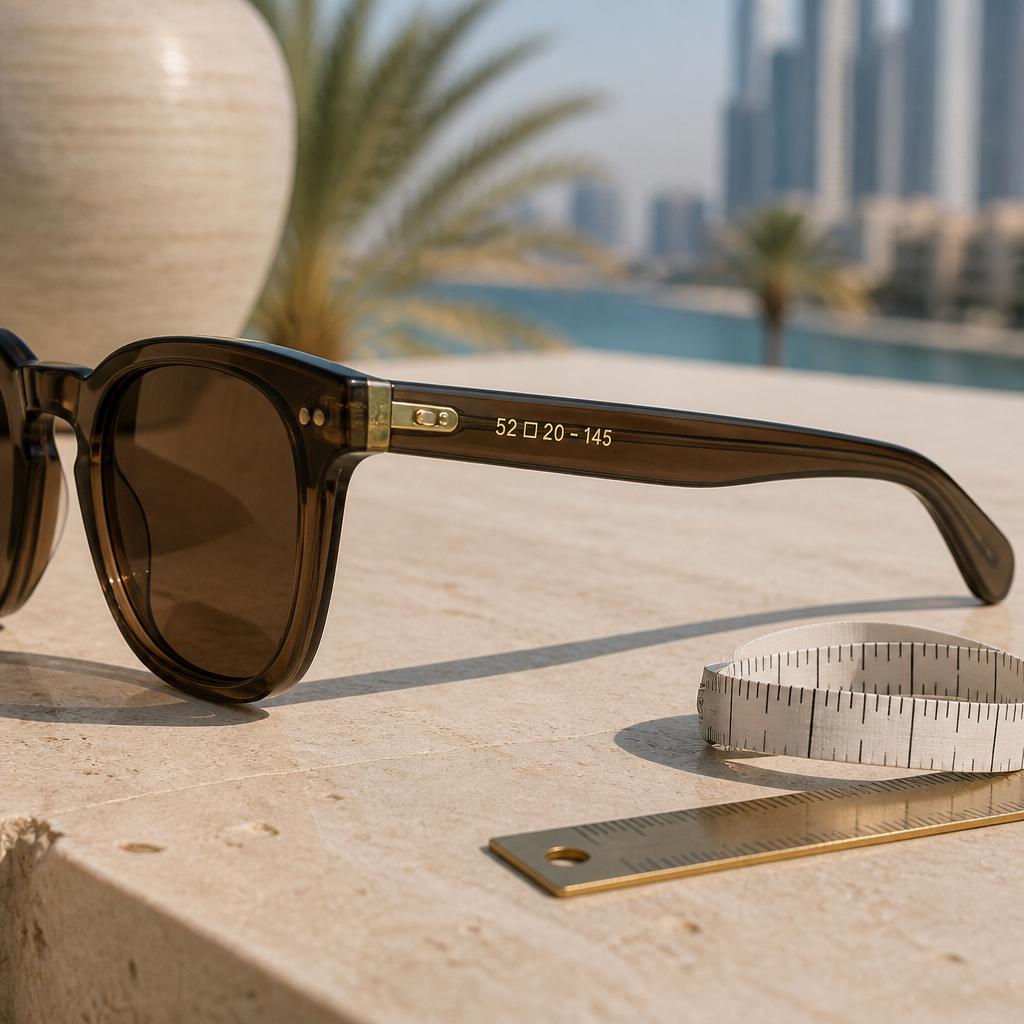
Each number measures something different. The first is the width of one lens, measured in millimeters. The second is the bridge, which is the gap between the two lenses above your nose. The third is the temple length, the length of the arm from hinge to tip. Keep that order in your head and you will never confuse them.
Lens width: what the first number tells you
The first number is the width of a single lens, not the full frame. It determines how far the glass extends toward your temples and how much of your eye area is shielded from light. A lens that is too narrow leaves exposed gaps at the sides, which is the most common complaint from buyers who wanted proper coverage for driving or beach days.
Ray-Ban's guide notes that the front measurement combines the lens width and the bridge width, usually separated by a small dash or a rectangle, as in 50 - 20. When you see that format, read the first figure as the lens and the second as the bridge. Do not add them together or treat the total as a size.
Bridge width: the second number
Bridge width is the distance between the lenses over your nose. Ray-Ban lists typical bridge widths between 12 and 26 millimeters, which tells you how wide the range is across styles. A bridge that is too wide sits low and slides down the nose, pushing the lenses into your lashes. A bridge that is too narrow rests on the upper part of the nose, tilts the lenses forward, and leaves pressure marks after a few hours.
Temple length: the number most buyers skip
Temple length decides how the arms sit above and behind the ears. On a broad head, short temples push the arms outward and create constant tension. On a narrow head, long temples let the frame wobble when you turn quickly. Temple length is the number people skip when they are excited about a style, and it is the one they regret most after a week of wear.
Measuring a Pair You Already Own
Labels fade, and many people wear sunglasses for years without ever reading the temple. If you own a pair that fits well, you can use it as a reference point. The goal is to copy the measurements of a frame you already like, not to guess a size from a photograph.
Using a ruler on the lenses
Place the frame on a flat surface with the lenses facing down. Measure the horizontal width of one lens at its widest point, then measure the gap between the lenses at the narrowest point. Write both figures down in millimeters. Ray-Ban's guidance says the measurements need not be exact and change from model to model, but the closer they are to your old frame, the more the new one will look similar on your face.
Use a clear ruler rather than a tape measure, because a flexible tape can curve around the lens and add a few millimeters that do not exist. A small steel rule or a printed fit card gives you a flat, reliable reading. Repeat the measurement twice and use the average if the numbers differ by more than a millimeter.
Measuring temple length from the hinge
Open the arm fully and measure from the hinge to the tip. Many buyers stop after the lens and bridge, but the temple figure is what predicts comfort behind the ear. If your old frame feels comfortable on a long day, its temple length is the reference you want, even if you do not like its color.
Pro tip: Measure your best-fitting pair, not your favorite-looking one. The frame that sits properly on your face is the reference you need, even if its style is a few seasons old.
Bridge Width and Your Nose
The bridge is the most underrated measurement in the whole set. Two frames with the same lens width can feel completely different because one sits on the sides of the nose and the other rests on its upper ridge. Getting the bridge right is what keeps the lenses level and at a comfortable distance from your eyes.
How nose shape changes the bridge choice
A low nose bridge tends to suit a frame with a wider bridge or a design that rests on the sides of the nose, because a narrow bridge would sit high and slide up toward the eyebrows. A high or narrow nose bridge often needs a narrower bridge measurement, or a keyhole design, so the frame does not slide down. Look at your own nose in a mirror from the side before you decide which direction you need.
Nose pads can adjust the fit a little, but they cannot turn a wrong bridge width into the right one. If a frame is two or three millimeters too wide at the bridge, no amount of bending the pads will stop it from sliding. Choose the bridge first, then fine-tune the pads.
Signs the bridge is wrong
Watch for three symptoms: lenses that sit too close to your lashes, dents on the nose that appear after a few hours, and a frame that keeps sliding even when it is snug. Each symptom points to a different problem. Lashes touching the lens usually means the bridge is too wide, while dents usually mean the bridge is too narrow or the pads are poorly placed.
Some designs use a keyhole bridge or a saddle bridge that changes how the frame rests on the nose. Check the product description for the bridge style, and do not compare a keyhole design to a standard bridge using the millimeter figure alone. The shape matters as much as the width.
Lens Width and Face Shape
Lens width should roughly match the width of your eye area, the space between your brow and your cheekbone. A large face paired with a narrow lens looks undersized, while a small face with an oversized lens can look like the frame is wearing you. Lens width is the first number you read, but it is only right when it works with the bridge and temple.
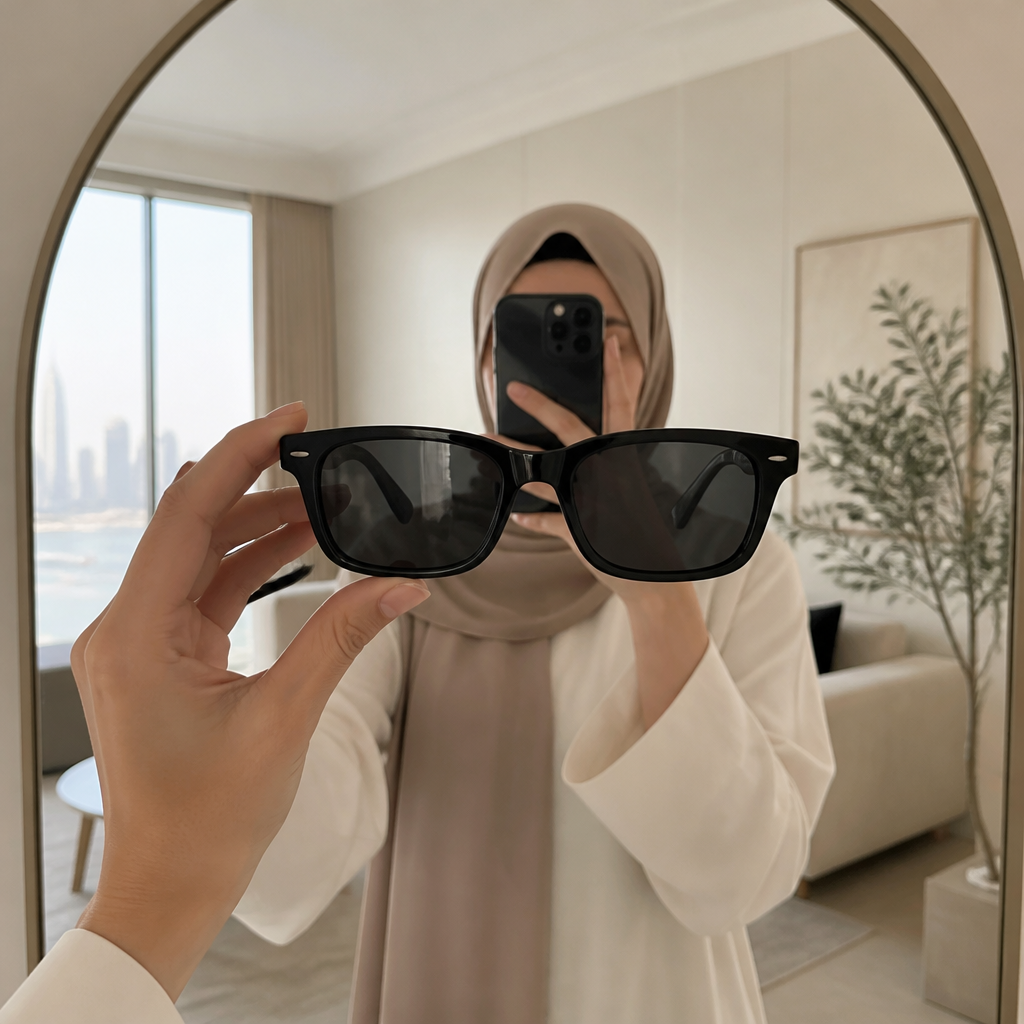
Matching lens width to your face width
Stand in front of a mirror and find the outer edge of your eye area, then compare that span with the lens width on the product page. You are looking for a frame whose lens sits just inside the outer edges of your brow and cheek, not one that stops halfway. If the lens extends well beyond the face, you will feel light leaking in at the side, and the frame will look bulky on a small head.
Do not chase a single ideal number. Lens width interacts with the bridge and temple length, so a 52 mm lens on a narrow head may fit better than a 50 mm lens if the bridge and arms are right. Judge the whole set of numbers together.
Face shape is a style decision, not a sizing rule
Round, square, oval, and heart face shapes are useful for choosing a silhouette, but they do not replace measurements. A square face can wear a round lens if the width and bridge match, and a round face can wear a square frame if the temple length is right. Fit comes first and style comes second, which is the order most buyers reverse.
Most fit complaints do not come from one wrong number. They come from reading only the lens width, or choosing a frame by its shape and color before checking the three measurements.
Why oversized frames change the math
Oversized frames push every measurement up, and the risk is in the temple. Longer arms on a large frame can grip the head too tightly on a narrow skull or let the frame drop backward on a wider one. When you buy an oversized style, pay closer attention to temple length than you would for a standard frame.
Comparing Fit Methods
There are several ways to work out a size, and they are not equally reliable. Some are fast but assume the printed numbers are correct, while others take a few minutes but reflect your own face. The table below compares three approaches we see buyers use most often.
| Method | Best For | Main Limitation |
|---|---|---|
| Printed temple numbers | Checking a frame before you buy and comparing it with a brand's own scale | Works only when the numbers are printed and legible, and brands do not all print them the same way |
| Measuring an owned pair with a ruler | Replacing a favorite frame after its labels have faded | Depends on the old pair being in good shape, since a stretched or bent frame gives a misleading reference |
| Brand size guide with lens and bridge references | Buyers switching between brands or moving from one style to another | Still requires your own measurements to pick the correct row, so the guide cannot choose for you |
My recommendation is to start with the printed numbers, then confirm them with a ruler against an old pair if you have one. Use the brand guide as a cross-check, not as the only source. Two checks take less than five minutes and prevent most of the returns that come from a size that looked right on screen.
Fit for UAE Sun and Heat
Fit in the UAE is not the same as fit in a cooler climate. Intense sun, glare off water and glass, and high humidity all change how a frame behaves on your face. The measurements stay the same, but the choices you make around them should reflect the conditions you live in.
Coverage matters more here
Sun in Dubai and across the wider UAE is strong for much of the year, and glare reflects off the sea, roads, and glass buildings. A frame with a wider lens and a closer wrap at the temples blocks more light from the sides. If you spend time on the water or in an open car, prioritize a lens that extends toward the temple and a temple length that keeps the arm close to the head.
Be careful not to chase coverage by buying a frame that is simply too big. An oversized lens with a bridge that is too wide will slide, and a frame that slides will leave gaps at the nose, which defeats the purpose.
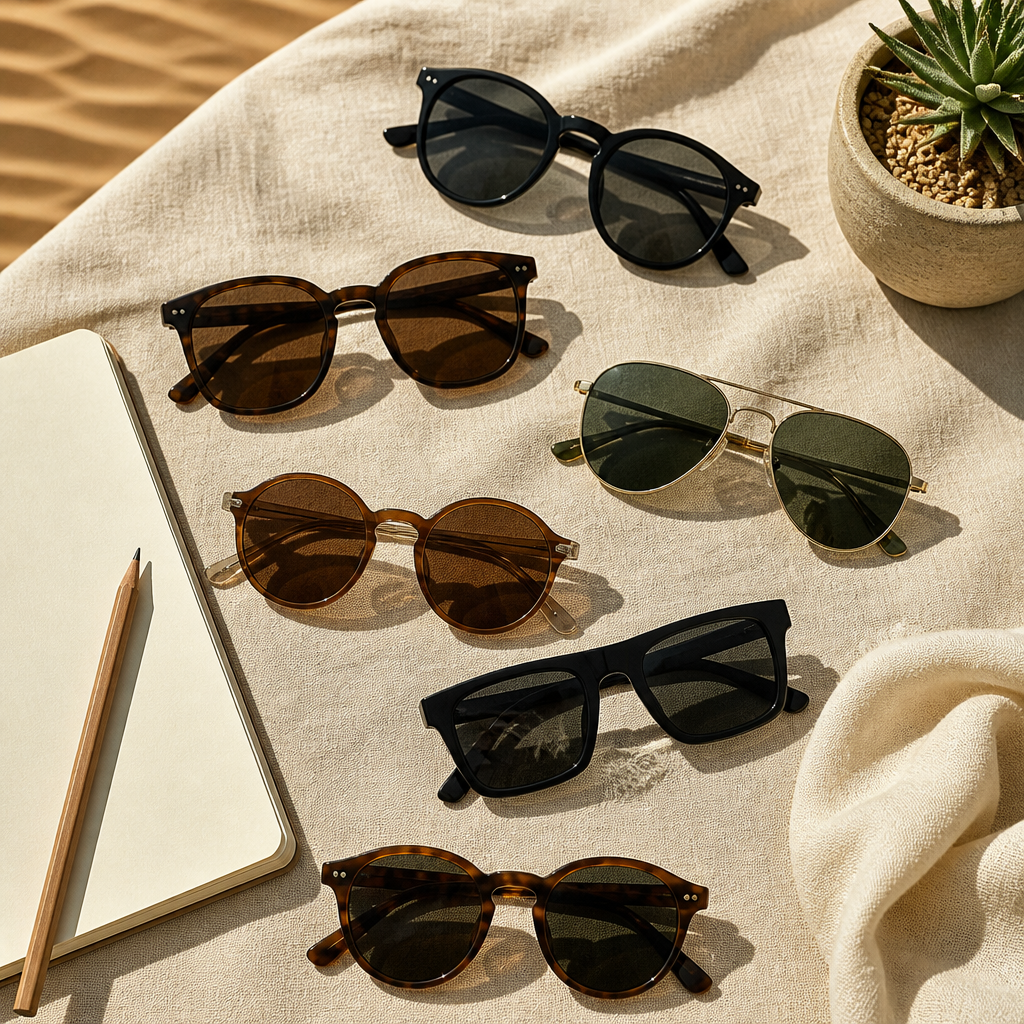
Sweat, heat, and the frame that slides
Heat changes how frames sit. Sweat on the nose and behind the ears reduces friction, so a frame that feels only slightly loose on a cool morning can become a constant irritation by midday. For this reason, I recommend a snug bridge fit rather than a loose one, and I suggest checking the nose pads before each season.
Snug does not mean tight. A frame that pinches the temples will leave red marks after a long day outdoors, and it will not improve with wear. Aim for a fit that stays in place when you nod your head or step out of a warm car into the air conditioning.
Pro tip: Try a new pair on in the same conditions you will wear it in. If you mostly drive, sit in your car with the engine running for a few minutes and check whether the frame stays put when the air conditioning shifts direction.
Ordering Online With Confidence
Buying designer eyewear online works well when you know which numbers to trust. Sunglass Hub ships authentic designer eyewear with free UAE delivery, 7-day returns, and cash-on-delivery payment, so you can take your measurements, order, and check the fit at home without paying a premium for the privilege. The return window is the safety net, but your measurements are what keep you from needing it.
A measurement checklist before you click buy
Before you add a pair to your basket, write down the lens width, bridge width, and temple length from the product page. Compare those numbers with the reference you measured from your old pair. If the lens is within a millimeter or two and the bridge matches closely, the frame is a strong candidate. If the temple length differs noticeably, treat that as a reason to look at another style, because temple length is the hardest figure to adjust later.
Keep a note on your phone with your three numbers. Once you have them written down, you can apply them to any brand in the same way, which is useful when you are comparing Ray-Ban with a designer model from another house.
What to do if the fit is off
If a frame arrives and feels wrong, identify the problem before you decide to return it. A bridge that slides points to a width issue, while lenses that touch your lashes point to a bridge that is too wide or a lens that sits too close to the eye. Temple problems usually show up as pressure behind the ears or a frame that tilts. Knowing which problem you have makes the return decision easier and helps you choose the right replacement.
Use the full 7-day window wisely. Wear the frame indoors and outdoors, in the car, and for at least one full afternoon, because a fit that feels fine in the first ten minutes can become uncomfortable by evening.
Pro tip: Stand in front of a mirror with your phone's camera in selfie mode. The camera shows whether the lenses sit level and whether the bridge rests where it should, which is easier to judge than your reflection in a shop mirror.
Frequently Asked Questions
How do I read sunglass frame measurements?
Look at the inside of the left temple for three numbers in millimeters. The first is the lens width, the second is the bridge width between the lenses, and the third is the temple length from hinge to tip.
What does bridge width mean on sunglasses?
Bridge width is the distance between the two lenses above your nose. Ray-Ban lists typical bridge widths from 12 to 26 millimeters, and the right figure depends on your nose shape and how the frame rests.
Is standard size the right choice for a first pair?
For most buyers, yes. Ray-Ban states that standard size is the correct one for more than 90% of its customers, so it is a sensible starting point if you have no measurement history with that brand.
How do I measure my sunglasses if the numbers have worn off?
Lay a well-fitting pair on a flat surface with the lenses down and measure the lens width and the bridge gap with a clear ruler. Measure the temple from the hinge to the tip with the arm fully open, then use those figures as your reference.
Can a frame have the right lens width and still feel wrong?
Yes. A frame can match on lens width but fail on bridge or temple length, which is why the three measurements should be read together. Lashes touching the lens, a frame that slides, or pressure behind the ears each point to a different number.
Share your experience with us: which measurement caused the most trouble with your last pair, and what finally fixed the fit for you?


