


Dubai Optical Industry: UAE's Rise as a Premium Eyewear Hub
Few retail sectors tell the story of the UAE's transformation as clearly as the Dubai optical industry. In a city where ultraviolet radiation beats down for most of the year, where fashion consciousness runs as deep as purchasing power, and where global luxury brands compete for prime retail space, eyewear stopped being a medical accessory long ago. It became a cultural statement. Understanding how the UAE arrived at this position, and what it means for buyers seeking genuine designer frames today, requires looking beyond the mall storefronts to the decades of infrastructure, consumer behaviour shifts, and market forces underneath them.
Table of Contents
- Quick Takeaways
- The Roots of Dubai's Optical Heritage
- Why the UAE Became a Premium Eyewear Market
- The Luxury Eyewear Landscape in the Middle East
- Designer Sunglasses in Dubai: The Buyer Profile
- Comparing Your Buying Channels: Retail, Mall, and Online
- The Counterfeit Problem and Why Authenticity Matters
- Where the Premium Eyewear UAE Market Is Heading
- Frequently Asked Questions
- References
Quick Takeaways
| Key Insight | Explanation |
|---|---|
| Dubai holds a dominant market share in UAE luxury eyewear | Dubai accounts for roughly 52-53% of the UAE's luxury eyewear market, driven by high purchasing power and extreme UV conditions that make quality sunglasses a daily necessity. |
| Sunglasses lead the product mix | In the UAE's luxury eyewear segment, sunglasses represent the largest category by market share, ahead of prescription eyeglasses and contact lenses. |
| The UAE market is growing steadily | Forecasts project the UAE luxury eyewear segment to grow at a CAGR of around 4.6% through 2030, with the broader eyewear market growing faster, driven by premium retail demand. |
| Legacy optical retailers trace back decades | Yateem Opticians has been operating since 1910, Magrabi since 1927, and Dubai Optical since 1978, giving the UAE one of the most established optical retail traditions in the region. |
| Counterfeit products are a live threat | The explosion of counterfeit luxury eyewear in regional markets puts pressure on both buyers and authentic retailers, making direct-from-manufacturer sourcing a meaningful differentiator. |
| Online luxury eyewear retail is expanding fast | The UAE online luxury eyewear retail market has grown significantly, driven by rising disposable incomes and increasing consumer comfort with e-commerce for premium purchases. |
| Social media reshapes buyer expectations | UAE consumers increasingly expect personalized product experiences and brand authenticity, with social media influencing purchase decisions at all price points in the luxury segment. |
The Roots of Dubai's Optical Heritage
The optical retail story in the UAE is older than most people assume. Yateem Opticians has been operating since 1910, and Magrabi, which has grown into the region's leading network of high-end eyewear stores with more than 130 branches across Saudi Arabia, the UAE, Kuwait, Qatar, and Egypt, traces its history back to 1927. These are not recently imported concepts chasing petrodollar wealth. They are businesses that grew alongside the communities they served, long before luxury malls and tourist footfall entered the picture.
Dubai Optical, another significant name in the local market, has been serving UAE customers since 1978, building more than four decades of reputation on authenticity and broad brand selection. What this history tells us is that the foundations of the Dubai optical industry were laid by family-oriented, community-focused retailers long before global luxury conglomerates discovered the Gulf as a strategic market.
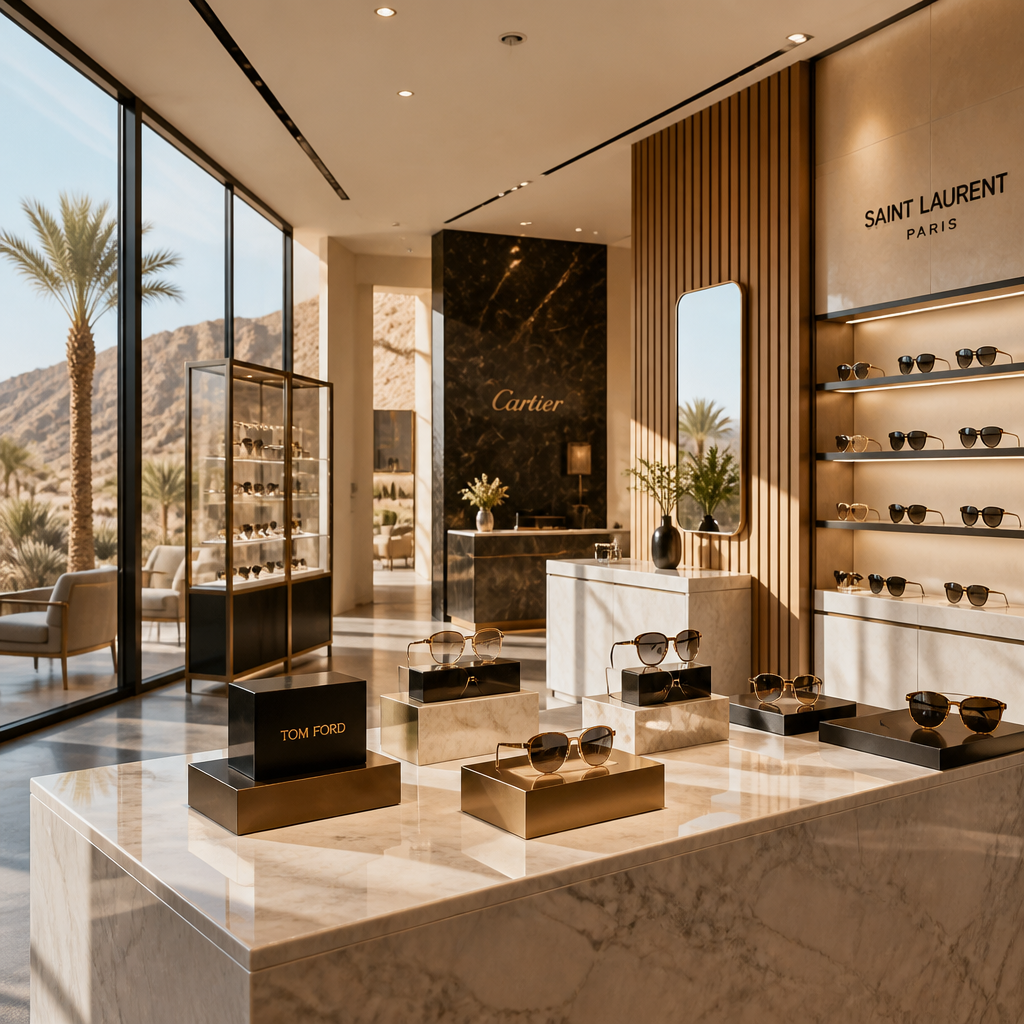
The shift toward premium designer eyewear accelerated with the UAE's broader economic modernization, urban expansion, and the opening of major retail complexes through the 1990s and 2000s. As Dubai Mall, Mall of the Emirates, and similar destinations became international shopping landmarks, optical boutiques followed. Rivoli EyeZone, Al Jaber Optical, and the Avanti concept from the Rivoli Group all established flagship presences in these high-traffic venues, making luxury frames as accessible as any other fashion purchase for residents and visitors alike.
The family legacy running through so many of these businesses matters for a reason beyond sentiment. It created a culture of optical retail in the UAE built on trust, long-term customer relationships, and a genuine understanding of what local buyers need, including UV protection suited to a region with intense sun exposure, frames that hold up in humid coastal conditions, and designs that work across both formal and casual Gulf style conventions.
Why the UAE Became a Premium Eyewear Market
The UAE did not become a hub for premium eyewear by accident. Several structural factors combined to create exactly the right conditions for a high-end optical market to flourish.
Climate as a Driver
The UAE's extreme climate is not a trivial factor. Intense sun exposure throughout most of the year means UV-protective eyewear is a genuine health requirement, not a discretionary fashion item. This creates a base demand for sunglasses that exists regardless of income level. When you layer high purchasing power on top of that base demand, the result is consumers who are willing to spend on quality frames that offer both real protection and aesthetic value.
Purchasing Power and Lifestyle
The affluent population, which makes up a meaningful proportion of UAE residents, drives demand for high-end sunglasses and eyewear brands in ways that go beyond simple substitution of cheaper alternatives. For a segment of UAE consumers, wearing Prada, Dior, or Porsche Design frames is part of a coherent lifestyle identity that extends through property choices, vehicle preferences, and travel habits. Designer eyewear fits naturally into this framework without requiring any justification.
UAE's fashion retail sector is expected to grow to significant scale, indicating a broad structural trend toward luxury and designer brands. This is not isolated to eyewear. But eyewear benefits from a particular dynamic: it is a visible luxury item, worn on the face, that signals taste and status at all times. That combination of high visibility and daily utility makes it one of the most logical luxury purchases in a fashion-forward market.
Tourism and Retail Infrastructure
Dubai's position as a global travel hub means its retail market is not limited to resident purchasing power. Millions of tourists move through Dubai annually, and many of them treat the city's malls as a primary shopping destination. This tourism dimension pushes retailers to maintain deep inventories of internationally recognised brands and keeps the luxury optical segment competitive on both selection and service quality.
A premium eyewear market does not emerge simply because wealth exists in a location. It forms when wealth, climate necessity, retail infrastructure, and a fashion culture converge and reinforce each other over decades. The UAE is arguably the clearest example of all four factors operating simultaneously.
The Luxury Eyewear Landscape in the Middle East
The broader Middle East luxury eyewear market places the UAE, and Dubai specifically, at its center. Dubai accounts for roughly 52-53% of the UAE's luxury eyewear market share, a dominance explained by the combination of extreme climate conditions, high per-capita spending on luxury goods, and the concentration of global luxury brand presence in the emirate.
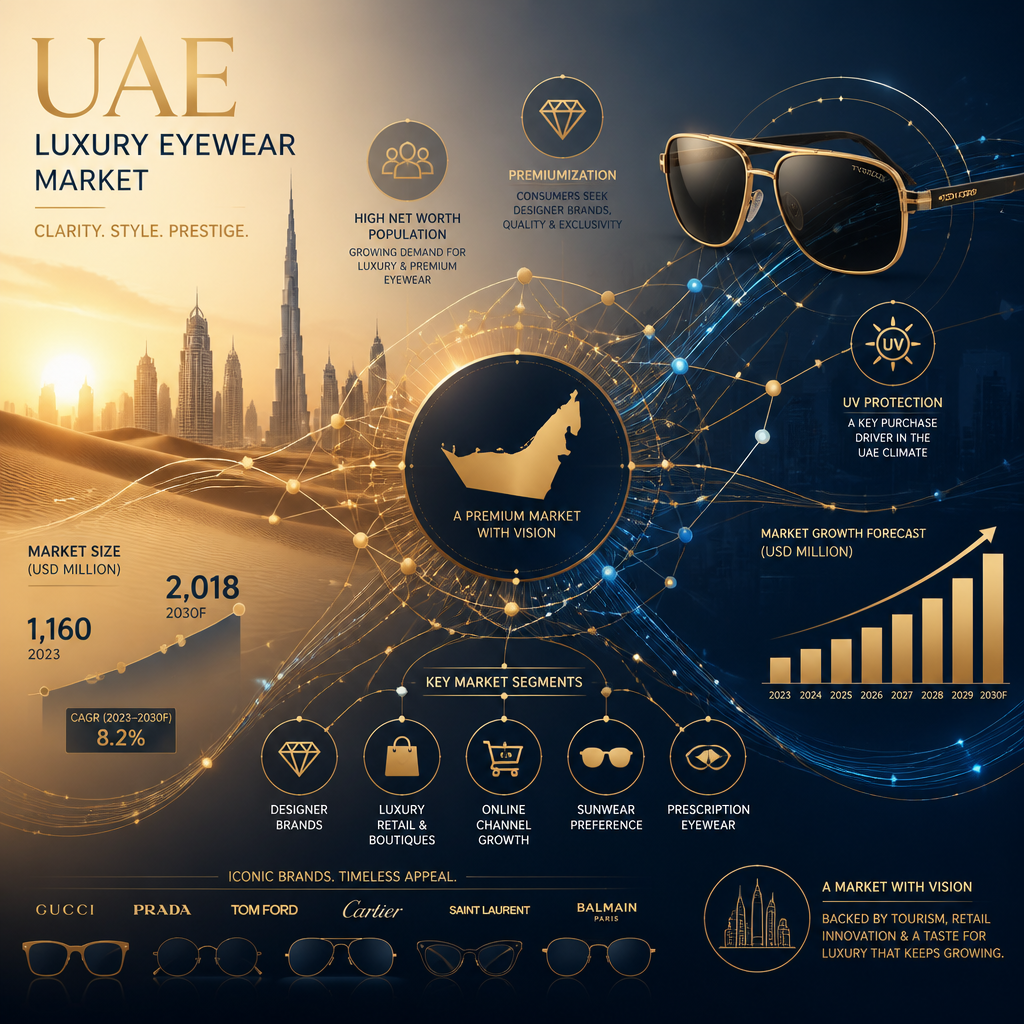
The UAE Luxury Eyewear Market is estimated to grow at a CAGR of around 4.6% during the forecast period of 2025 through 2030, with the broader UAE eyewear market projected to grow at an 8.01% CAGR through 2031. These growth rates matter for buyers because they tell you something about what's happening in the market structurally: more brands are entering, more distribution channels are opening, and competition for the informed buyer's wallet is intensifying.
Within the luxury eyewear segment, sunglasses hold the leading position by product type, commanding around 55% of market share. This is consistent with the climate logic already described, but it also reflects the status signaling function of sunglasses in the Gulf context. A prescription frame may be more practically consequential for a buyer, but a pair of designer sunglasses worn at a brunch, on a yacht, or at a shopping center is a more publicly visible luxury signal.
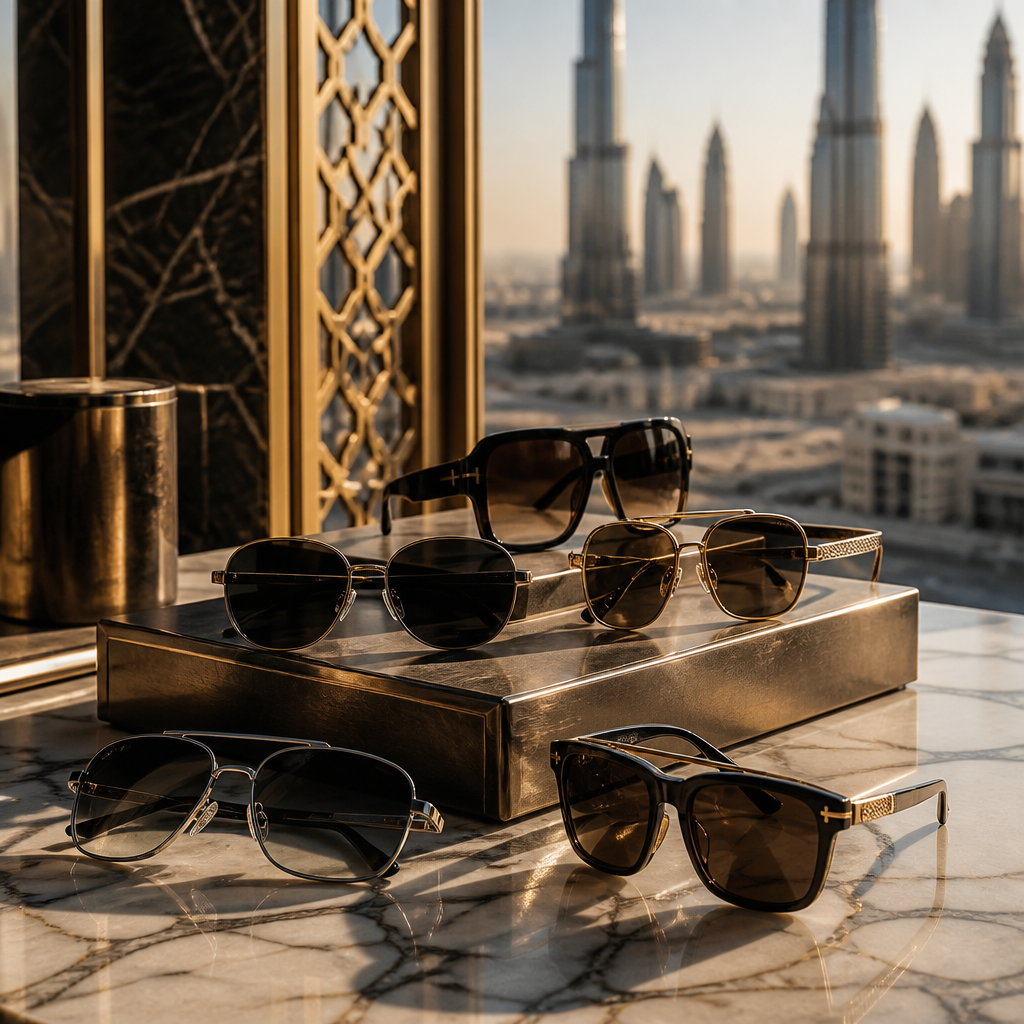
The major established players in the regional luxury optical space include Magrabi, with its network of over 130 branches carrying brands like Bvlgari, Dolce and Gabbana, Prada, and Cartier, alongside exclusive labels such as Balmain and Valentino. Rivoli EyeZone maintains its own strong multi-brand position with Bvlgari, Cartier, Chanel, Dior, Gucci, and Tom Ford in its portfolio. These are genuinely impressive ranges, but they come with the pricing structures of large-footprint retail operations, which not every buyer needs to pay.
Designer Sunglasses in Dubai: The Buyer Profile
The buyer of designer sunglasses in Dubai is not a monolith. The market contains several distinct profiles, each with different priorities, and understanding them makes it easier to see why specific retail formats succeed and others struggle.
The Resident Professional
This buyer is UAE-based, likely works in finance, real estate, or a corporate sector, and treats eyewear as part of a curated personal style. They know what brands they trust, often prefer classic silhouettes from Ray-Ban, Emporio Armani, or Porsche Design, and will research a purchase before committing. Authenticity is non-negotiable for this buyer. Price matters, but not at the expense of confidence in what they are buying.
The Fashion-Forward Millennial and Gen Z Consumer
Younger UAE consumers, particularly millennials and Gen Z, are willing to invest in premium products that enhance personal style and social status. Social media plays a central role in shaping their preferences, and they expect brands to offer personalized or customized experiences. This cohort is also more comfortable buying premium items online than older consumer segments, making e-commerce channels increasingly relevant for reaching them with designer eyewear.
The Tourist Buyer
Dubai's retail reputation attracts tourists who specifically allocate budget for luxury purchases during visits. These buyers often compare prices across markets and may purchase here because of competitive pricing relative to their home markets, combined with guaranteed access to authentic products from authorised retail environments.
Pro tip: If you have been referred to Sunglass Hub by a friend, the buying experience is designed for exactly the resident professional and informed online buyer profiles. You are not paying for a marble-floored showroom or mall-level overheads. You are paying for the frame, sourced directly from manufacturers, with the same authenticity guarantee but without the markup that bricks-and-mortar luxury retail requires to cover its costs.
Comparing Your Buying Channels: Retail, Mall, and Online
In Dubai's optical market, the channel you buy through has real pricing and experience consequences. The three main options available to a buyer of designer eyewear in the UAE each carry distinct trade-offs worth understanding before you commit.
| Channel | Typical Characteristics | Best For |
|---|---|---|
| Luxury Mall Optical Boutique (e.g. Magrabi, Rivoli EyeZone) | Wide brand selection, in-person fitting, eye testing services available, premium in-store experience. Higher prices reflect significant retail overhead. Risk of upselling on frames you did not intend to consider. | Buyers who want a tactile try-on experience, need eye testing alongside their purchase, or are undecided between brands and benefit from in-person browsing. |
| Established Chain Optical Retail (e.g. Dubai Optical, Al Jaber Optical) | Long-standing local presence, often insurance-compatible, broad price range from accessible to premium. Quality varies significantly by branch and staff knowledge. Some chains have useful online store options. | Buyers who want a familiar, trusted chain experience with flexibility on insurance billing and a broader product range that includes non-luxury segments. |
| Direct-to-Consumer Online Eyewear (e.g. Sunglass Hub) | Products sourced directly from manufacturers, eliminating middleman markups. Narrower physical footprint means lower overhead passed to the buyer. Free UAE delivery, 7-day returns, cash-on-delivery available. Focus on authenticated designer frames. | Buyers who know the brand and model they want, have been referred by someone they trust, value price fairness over the in-store theatre, and want a clean, no-pressure purchase experience. |
The direct comparison reveals something important: none of these channels is objectively superior. The right choice depends entirely on where you are in the buying process. If you already know you want Ray-Ban Aviators or a specific Dior frame, the incremental value of a luxury mall boutique visit is low. You are paying for an experience you do not need. If you are genuinely undecided and want to try fifteen frames in person, the mall format makes more sense, even with the premium pricing.
Pro tip: The most common mistake buyers make in Dubai's optical market is assuming that a higher-overhead retail environment means better product authenticity. Authenticity depends on sourcing, not store design. Always ask where a retailer sources its stock and whether products come directly from authorised brand distributors or manufacturers.
The Counterfeit Problem and Why Authenticity Matters
The proliferation of counterfeit luxury eyewear in regional markets is not a peripheral issue. It is a significant structural problem that affects both consumer safety and brand reputation. Counterfeit sunglasses present specific dangers that go beyond cosmetic disappointment: fake UV-protective lenses often provide no real UV filtration, which can cause retinal damage in a region with the solar intensity of the Gulf.
The large number of counterfeit products that have entered the regional market creates serious problems for revenues and the reputation of legitimate brands. For buyers, it creates a verification challenge that should inform every purchase decision in channels where provenance is unclear, including grey-market importers, informal resellers, and some online marketplaces where listing authenticity is not guaranteed.
What distinguishes serious optical retailers in this market is their sourcing transparency. The family-founded businesses with decades of history in UAE optical retail built their reputations on exactly this point. Yateem Opticians, Dubai Optical, Magrabi, and Al Jaber Optical all stake their credibility on stocking authentic products. The newer direct-to-consumer online model, as practiced by Sunglass Hub, takes this a step further by sourcing directly from manufacturers, removing the intermediary stages where substitution risk increases.
In practice, buyers should be sceptical of any channel where prices for well-known luxury brands seem implausibly low and where no clear sourcing explanation is offered. A genuine Prada or Dior frame has a cost structure that sets a real floor on legitimate pricing. Significantly below-floor pricing is the clearest signal that something in the supply chain is not what it appears to be.
Where the Premium Eyewear UAE Market Is Heading
The UAE eyewear market is evolving toward what analysts describe as an omnichannel ecosystem, where digital innovation and in-store expertise work together rather than competing. This is already visible in the practices of established retailers: Avanti, the premium Rivoli Group concept at Dubai Mall, positions itself as a ZEISS Vision Expert centre, combining advanced contactless eye-testing technology with curated luxury eyewear selection. The message is that the in-store experience needs to offer something qualitatively different from online browsing to justify its cost.
On the online side, the UAE Online Luxury Eyewear Retail Market has grown substantially, driven by increasing disposable incomes, a growing preference for luxury brands, and the expansion of e-commerce platforms that make accessing high-end eyewear straightforward. In 2023, the UAE government implemented regulations to enhance consumer protection in online retail, mandating that e-commerce platforms provide clear return policies and ensure data privacy for customers. This regulatory backdrop makes the online luxury purchase more confident for consumers than it was even a few years ago.
The social media dimension of this shift should not be underestimated. UAE buyers, particularly younger ones, increasingly arrive at purchase decisions with significant research already completed. They know which Ray-Ban silhouette suits their face, which Dior frame appeared in a recent campaign, and what the frame should cost if sourced legitimately. This informed buyer is well-served by a direct, transparent retail model that does not require them to sit through a sales pitch before reaching the product they already decided on.
The brands showing strength in the UAE premium segment include the classics, Ray-Ban, Prada, Dior, Emporio Armani, and Porsche Design, alongside emerging luxury labels finding regional audiences through selective boutique distribution. The market fragmentation that challenges large retailers actually works in favor of niche, quality-focused operations that can serve specific brand communities without the overhead of carrying every category.
Frequently Asked Questions
Why does Dubai have such a strong culture around luxury sunglasses?
The combination of year-round high UV exposure, high per-capita income, a fashion-forward consumer culture, and world-class retail infrastructure makes Dubai uniquely suited to luxury eyewear demand. Sunglasses are both a practical daily necessity and a visible status marker in the Gulf context, which drives spending on premium frames well beyond what purely functional markets would support.
Which brands dominate the designer sunglasses Dubai market?
Ray-Ban, Prada, Dior, Gucci, Bvlgari, Tom Ford, Cartier, Emporio Armani, and Porsche Design are consistently among the strongest performers in Dubai's premium eyewear market. The specific mix varies by retailer, but these labels appear across virtually every serious optical boutique in the city. Brands like Balmain and Valentino have also gained traction through selective distribution.
How can I verify that designer sunglasses sold in the UAE are authentic?
The most reliable approach is to buy from retailers who source directly from manufacturers or authorised brand distributors, and who can clearly explain their supply chain when asked. Physical indicators such as engraving quality, lens clarity, hinge construction, and packaging detail are useful secondary checks, but supply chain transparency from the retailer is the primary safeguard. Pricing that sits implausibly below market rates for a known luxury brand is always a warning signal.
Is it safe to buy luxury eyewear online in the UAE?
Yes, provided you buy from a retailer with clear authenticity policies, transparent sourcing, and proper return terms. The UAE government has implemented consumer protection regulations for online retail that require clear return policies and data privacy standards. Retailers like Sunglass Hub who offer 7-day returns, free UAE delivery, and direct manufacturer sourcing operate within exactly this framework, making the online purchase of luxury eyewear a straightforward and safe transaction.
How does the premium eyewear UAE market compare to other luxury retail sectors in the region?
Eyewear performs particularly well in the UAE luxury retail mix because it sits at the intersection of daily utility and visible luxury signaling. Unlike some luxury categories that are predominantly aspirational or occasion-based, quality sunglasses are worn daily in the UAE climate, giving them a functional justification that supports premium spending across a broad consumer base. The UAE fashion retail sector as a whole is on a strong growth trajectory, and eyewear benefits from the same tailwinds driving that broader expansion.
What is the difference between buying at a mall optical boutique versus an online eyewear retailer in Dubai?
Mall optical boutiques offer in-person fitting, immediate product handling, and often integrated eye-testing services. These are genuine advantages for undecided buyers. However, the overhead costs of prime mall retail space are incorporated into product pricing, meaning you pay for the experience regardless of whether you value it. Online retailers with direct manufacturer sourcing can offer the same authentic frames at prices that reflect actual product cost rather than retail infrastructure cost, which is a meaningful difference for buyers who already know what they want.
Share your experience of buying designer eyewear in the UAE below, whether you have navigated the mall boutiques, found a great deal online, or have strong views on which brands are worth the premium, your perspective helps other readers make smarter choices.
References
- UAE Luxury Eyewear Market growth analysis and Dubai market share data
- United Arab Emirates eyewear market overview and CAGR projections
- UAE online luxury eyewear retail market valuation and e-commerce trends
- Guide to optical shops in Dubai including legacy retailers and brand histories
- UAE Luxury Eyewear Market research library with segment and forecast data

