


Match Sunglasses to Your Outfit: A Dubai Styling Guide
Most people in the UAE buy sunglasses for the sun, then wonder why they never look right with what they wear. The fix is not a bigger collection. It is learning to match sunglasses to your outfit by reading three things: the shape of the frame, the finish of the metal or acetate, and the color of the lenses. When those three echo your clothes, even a plain shirt and jeans looks deliberate. This guide explains how we approach it at Sunglass Hub, from office dress in an air-conditioned lobby to weekend linen on a boat deck, with a practical rotation you can build without buying ten pairs.
Table of Contents
- Quick Takeaways
- Start With the Outfit, Not the Shelf
- Matching Frame Shape to Your Face and Collar
- Metal, Acetate and Color Coordination
- Lens Color for Dubai Light
- Dressing for Office, Weekend and Evening
- Building a Three Pair Rotation
- Three Matching Approaches Compared
- Where Designer Frames Earn Their Price
- Frequently Asked Questions
- References
Quick Takeaways
| Key Insight | Explanation |
|---|---|
| Match the outfit first, then the face | Your top layer and level of formality decide the frame style. Face shape then narrows the choice within that style. |
| Repeat one element, do not copy the whole outfit | Echo the metal in your watch, the tone of your belt, or the color of your shoes in the frame. Matching every item looks forced. |
| Wider-at-the-bottom frames balance most faces | Round and light aviator shapes add visual weight at the lower edge, which helps when the face is narrow at the chin. |
| Warm metals suit earth tones, cool metals suit monochrome | Gold and tortoise work with beige, camel and olive. Silver and gunmetal work with grey, navy and white. |
| Judge lenses by UV labeling, not tint | Dark lenses can feel protective without blocking UV. Check the protection label before you choose a color for style. |
| Own three pairs, not ten | An everyday neutral, a metal statement pair, and a sport or wraparound pair cover most of the week in the UAE. |
Start With the Outfit, Not the Shelf
When customers message us asking which pair goes with their outfit, the first question we ask is what they are wearing this week, not which brand they like. Sunglasses are easiest to match when you work backward from clothing. Start with the dominant color, the level of formality, and the texture of the fabric, then choose a frame that fits that combination.
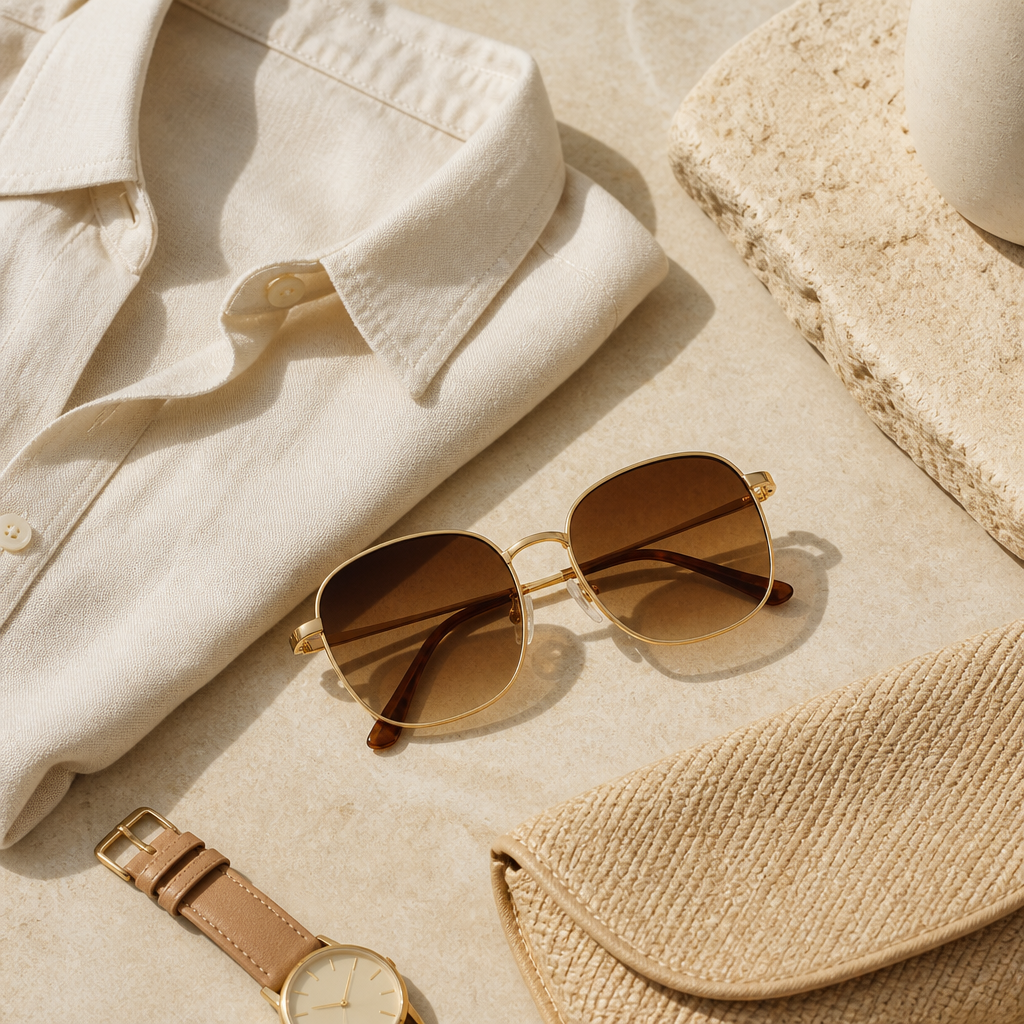
Formality matters more than color for most people. Sharp tailoring pairs well with crisp geometry, so a clean rectangular or browline frame reads as intentional with a navy blazer. Soft, flowing outfits such as linen shirts or a relaxed kaftan usually look better with rounder, more fluid shapes, because the lines of the frame and the lines of the clothes should support each other rather than compete.
A common mistake is matching sunglasses to shoes or a handbag. Sunglasses sit closest to your face, so they should respond to your top layer and your skin tone first. Shoes and bags are a secondary check, not the starting point.
Pro tip: Stand in front of a mirror wearing the full outfit and hold the frame at eye level before you pay. If the frame looks like something you borrowed from another outfit, the match is wrong, even if the color looks right.
Matching Frame Shape to Your Face and Collar
Once you know the mood of the outfit, face shape narrows the choice. Many people describe faces in broad categories such as round, square, heart and oval, and the goal is to create contrast rather than repeat the same geometry. A frame that echoes the sharpest angle of your face can make the jaw look heavier, while a frame that softens it tends to look balanced.
Round and Oval Faces
If your face is round, angular frames add structure and make the overall look more defined. Square and rectangular silhouettes are a strong option here, especially in a thin metal finish that does not add bulk. Oval faces have the most flexibility and can wear almost any shape, but a slightly bolder top line often suits them better than a delicate wire.
Wider-at-the-bottom styles are worth trying on a narrow face. Guidance from style writers consistently points to round or light aviator shapes for this reason, since the wider lower edge creates visual balance. Avoid frames that are heavy or top-heavy, because they make a narrow face look even longer and more top-weighted.
Square and Heart Faces
Square faces usually look best with round or gently curved frames. The curve softens strong lines in the jaw and forehead, and a metal wire or thin acetate keeps the look from feeling too soft. Avoid very square frames with a heavy top bar, which can exaggerate the angle rather than balance it.
Heart-shaped faces are wider at the brow and narrower at the chin, so the most reliable choice is a frame that is wider at the bottom or has a low bridge. Aviators and round frames in a light finish are classic options. Oversized frames can work too, provided the bottom edge sits low enough to balance the forehead.
Collar and neckline also matter. A crew neck or open polo pairs well with almost any frame, but a high mandarin collar or a kandura with a tall neckline usually looks better with a slim, understated frame. Heavy acetate on a high collar can make the head look disconnected from the body.
Metal, Acetate and Color Coordination
Material and color carry more of the styling signal than most people expect. The frame finish tells the eye whether the sunglasses belong to a warm, relaxed palette or a cool, sharp one. Choosing the right family makes every other decision easier.
Gold, Silver and Gunmetal Hardware
Gold and rose-gold metals suit beige, camel, cream, olive and rust. They pick up the warmth in a leather bag or a sand-colored jacket, and they look especially natural on a summer evening outfit. Silver and gunmetal work better with grey, navy, white and black, because they match the cooler undertones of those colors.
Mixed metals are a trap for beginners. A gold watch with silver-framed sunglasses is not wrong, but it sends two signals at once. Pick one metal family and repeat it in one other accessory, such as a belt buckle or ring, so the frame looks like part of a plan.
Acetate Colors: Black, Tortoise and Beyond
Black acetate is the most forgiving choice in a Dubai wardrobe, since it works with monochrome outfits, denim and tailoring. It can look harsh against pastel linen, so use a lighter tone or a semi-transparent frame when the outfit is soft. Tortoiseshell is the other reliable neutral, because its brown and amber tones sit comfortably with almost any earth-toned or cream outfit.
Bolder acetate colors such as deep green, burgundy or clear frames work best when the rest of the outfit is quiet. A single colored frame against a white shirt and dark trousers gives the look a focal point. The same frame on a patterned top usually competes with the print.
The frame should repeat something already in the outfit, whether that is the metal in a watch or the tone of a belt. Repetition is what makes accessories look planned rather than assembled.
Lens Color for Dubai Light
Lens color is where function and style collide. In a city with strong sun for much of the year, most buyers want a lens that is comfortable in bright light and suits the outfit. The problem is that tint alone does not tell you how much UV a lens blocks, and many shoppers assume a dark lens is automatically protective.
Check the protection label first. Look for clear UV protection information on the product listing or label, and treat lens color as a style decision layered on top. Dark lenses without proper UV filtering may feel protective while offering less than you expect, which is why we always suggest reading the specification before choosing a color.
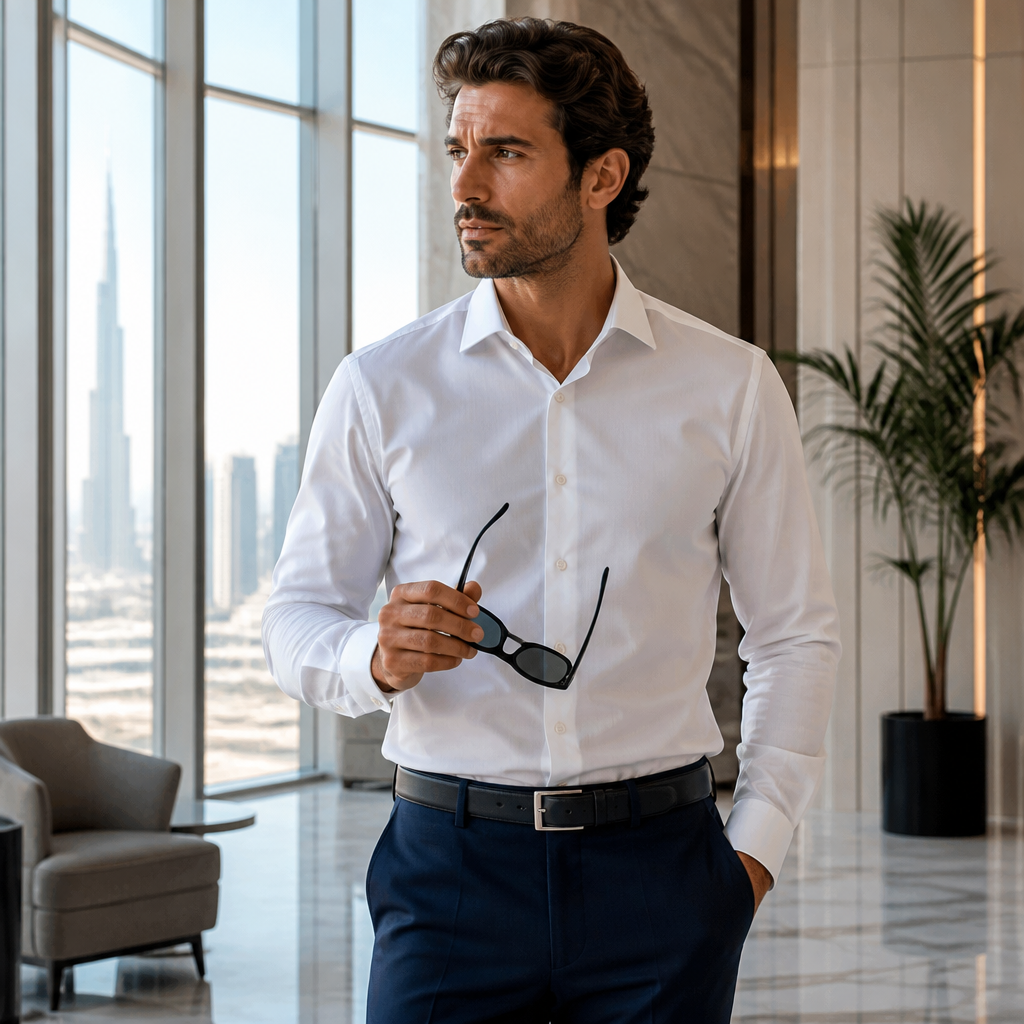
For everyday wear, grey and brown lenses are the safest choice. They keep colors looking natural, which helps when you are matching an outfit, and they suit both office and casual looks. Green lenses add a slightly warmer, vintage feel that works with khaki, olive and cream.
Mirror and gradient lenses are a more specific choice. Mirrored finishes can look sharp with a metal frame and a tailored outfit, but they draw attention on a muted look and can seem like a costume with plain clothes. Use them as a deliberate statement, not a default.
Pro tip: If you drive a lot or spend time on the water, polarized lenses reduce reflected glare from the road and the surface. Confirm the UV protection label separately, because polarization and UV blocking are not the same feature.
Dressing for Office, Weekend and Evening
The same frame can look right in one setting and wrong in another. Thinking in scenarios is more useful than thinking in brands, because you dress for the day you actually have. Most people in the UAE move between air-conditioned indoor spaces and bright outdoor ones within a single day, so the sunglasses need to work in both.
Office and Smart Casual
For an office look, choose a frame that matches the structure of your tailoring. A navy suit or a crisp shirt with dark trousers pairs well with a slim metal frame or a dark acetate browline. Keep the color restrained, because the sunglasses will likely be on your desk or in your hand for much of the day.
Smart casual gives you more room. A pale shirt with chinos and loafers can handle a tortoiseshell frame or a light aviator, which adds personality without shouting. The rule here is simple: if the frame would look odd in a meeting, it does not belong in your everyday rotation.
Weekend Linen, Denim and Beach Days
Weekend outfits are where most people experiment, and the best results come from looseness rather than boldness. A linen shirt with relaxed trousers suits a wraparound or round frame in tortoise or a warm metal. Denim responds well to either black or tortoise, depending on whether you want a sharper or softer finish.
Beach and boat days call for practical coverage. A slightly larger frame or a wraparound style protects the sides of the eyes and looks consistent with a casual outfit. Choose a frame that stays put when you move, because sliding sunglasses ruin any look.
Evening and Dinner Events
Evening sunglasses are less common, but they matter for outdoor terraces and rooftop events, where people often wear sunglasses until sunset. A metal frame in gold or a sleek black acetate works with dressier outfits, including dark tailoring and cocktail dresses. Keep the shape clean and avoid heavy designs, since they compete with jewelry and tailored details.
Building a Three Pair Rotation
You do not need a large collection to match sunglasses to your outfit well. A three pair rotation covers most of the week and gives you a clear rule for each situation. Each pair has a job, and the job decides how it is chosen.
The first pair is your everyday neutral. Choose black or tortoise acetate with grey or brown lenses and a medium-sized frame. A classic wayfarer-style shape is a strong starting point, because it works with office clothes, denim and casual trousers without much thought.
The second pair is your statement piece. This is usually a metal frame, such as a gold or silver aviator or a round wire frame, in a shape that stands out. Wear it with a monochrome outfit or a single bold piece, so the sunglasses become the focal point rather than the second accessory.
The third pair is your active or coverage pair. A wraparound or sport-inspired frame suits driving, beach days and long outdoor afternoons, and it matches casual clothing better than dressy tailoring. Keep it practical, because you will reach for it when comfort matters more than style.
Three Matching Approaches Compared
Most people match sunglasses in one of three ways, and each has a clear use case. The table below compares them so you can choose the method that fits your situation rather than copying a single rule everywhere.
| Approach | Works Best When | Where It Goes Wrong |
|---|---|---|
| Outfit-first matching | You are dressing for a specific event, such as a meeting, a brunch or a dinner, and the outfit has a clear mood. | It ignores face shape, so a frame that suits the clothes can still be uncomfortable or unflattering. |
| Face-first matching | You are buying your first designer pair or choosing a replacement for a frame that never looked right. | It can produce sunglasses that flatter the face but clash with a strong outfit, especially with bold prints. |
| Accessory repetition | You already wear a consistent metal or color in your watch, jewelry or belt, and want the frame to feel connected. | It can feel forced if you repeat too many elements, so limit it to one or two echoes per outfit. |
Where Designer Frames Earn Their Price
Designer sunglasses are not worth buying for the logo alone. They earn their price when the frame is comfortable, the finish holds up, and the shape works with several outfits in your wardrobe. Brands such as Ray-Ban, Prada, Dior, Emporio Armani and Porsche Design each have distinct shapes and finishes, so the question is which one suits your daily rotation.

Sunglass Hub sources its products directly from manufacturers, which is why we can say every frame we sell is 100% authentic. Authenticity matters for styling as much as for value, because the finish, the hinge and the lens coating are what make a frame look right on a real face. A counterfeit or poorly finished pair tends to look flat in photographs and sits badly on the nose.
When you choose a designer pair, prioritize the one you will wear most often. A neutral acetate frame worn three times a week for two years returns far more value than a statement pair that sits in its case. Sunglass Hub offers free UAE delivery, cash-on-delivery payment and 7-day returns, so you can test a frame at home against your outfits before you commit.
Pro tip: Before you wear a new pair out, try it on with the outfit you plan to wear it with, in natural daylight if possible. Check that the bridge sits evenly and that the frame does not slide when you look down, since comfort determines how often you actually wear the pair.
Frequently Asked Questions
Should my sunglasses always match my outfit exactly?
No. Aim for an echo rather than an exact match. Repeat one element, such as the metal in a watch or the tone of a belt, so the frame looks connected to the outfit without looking coordinated down to the last thread.
Which sunglasses work best with traditional dress such as a kandura or abaya?
Keep the frame understated. Thin metal or classic acetate in black or tortoise suits the clean lines of traditional dress. Oversized or highly decorative frames can compete with the outfit, so save bolder shapes for everyday clothing.
Do I need polarized lenses for driving in the UAE?
Polarized lenses reduce reflected glare from roads and water, which many drivers find useful. Polarization is not the same as UV protection, so check the UV label on any pair you choose, whether or not the lenses are polarized.
How many pairs of sunglasses does a typical wardrobe need?
Three is enough for most people. An everyday neutral, a metal statement pair and a wraparound or active pair cover office, weekend and outdoor needs without crowding your shelf.
Are black frames the safest choice for every outfit?
Black is the most versatile option, but it can look heavy against pastel or very soft outfits. In those cases, a tortoise frame, a lighter acetate or a thin metal style usually balances the look better.
Which matching rule has worked best for you, and have you found a frame shape that your face and wardrobe both agree on? We would like to hear about your experience in the comments.
References
- Guide to choosing sunglasses by face shape and frame balance
- Sunglasses style tips for matching frames to everyday outfits


