


Titanium Eyeglass Frames UAE: Why They Feel Lighter
Put on a titanium frame after a day in a heavier acetate pair and the difference shows up within seconds. The bridge sits lighter, the temples stop pressing into your head by mid-afternoon, and the front of the glasses feels like it belongs to you rather than to the shelf. In the UAE, where you might step from an air-conditioned car into a sun-baked car park several times a day, that comfort matters more than most product pages admit. This guide explains what titanium eyeglass frames really are, how they handle Dubai heat and sun, and how to choose a designer pair that still looks right in three years.
Table of Contents
- Quick Takeaways
- What Makes Titanium Different
- How Titanium Frames Feel on the Face
- Durability in UAE Heat, Humidity and Sun
- Designer Titanium Frames: What to Look For
- Fit First: Measuring Before You Buy
- Titanium Compared With Other Frame Materials
- Buying and Caring for Titanium Frames in the UAE
- Frequently Asked Questions
- References
Quick Takeaways
| Key Insight | Explanation |
|---|---|
| Most "titanium" frames are alloys | Check the listing for the alloy or the frame construction. Two frames with the same label can weigh and feel noticeably different. |
| The weight saving is real | Titanium is roughly 40 percent less dense than stainless steel, so a comparable frame can be clearly lighter on the nose and ears. |
| Titanium does not block UV | Sun protection comes from the lens. Confirm UV400 or equivalent protection on the lens, whatever the frame is made of. |
| Heat and sweat favor metal | Titanium resists corrosion and keeps its shape in hot cars, where acetate can soften and warp over time. |
| Fit matters more than the material | A titanium frame with the wrong bridge width will still slide down your nose. Measure your current pair before you order. |
| Ask about the temple material | Some designs combine a titanium front with different temple materials, which changes both weight and comfort. |
What Makes Titanium Different
Titanium is a metal, but the frames sold under that name are rarely pure titanium. Most are made from titanium alloys, with small amounts of other metals added to improve strength and make the material easier to form into thin, precise wire and sheet. The alloy is what the frame maker actually works with, so two frames both labeled titanium can feel quite different depending on the recipe and the finishing.
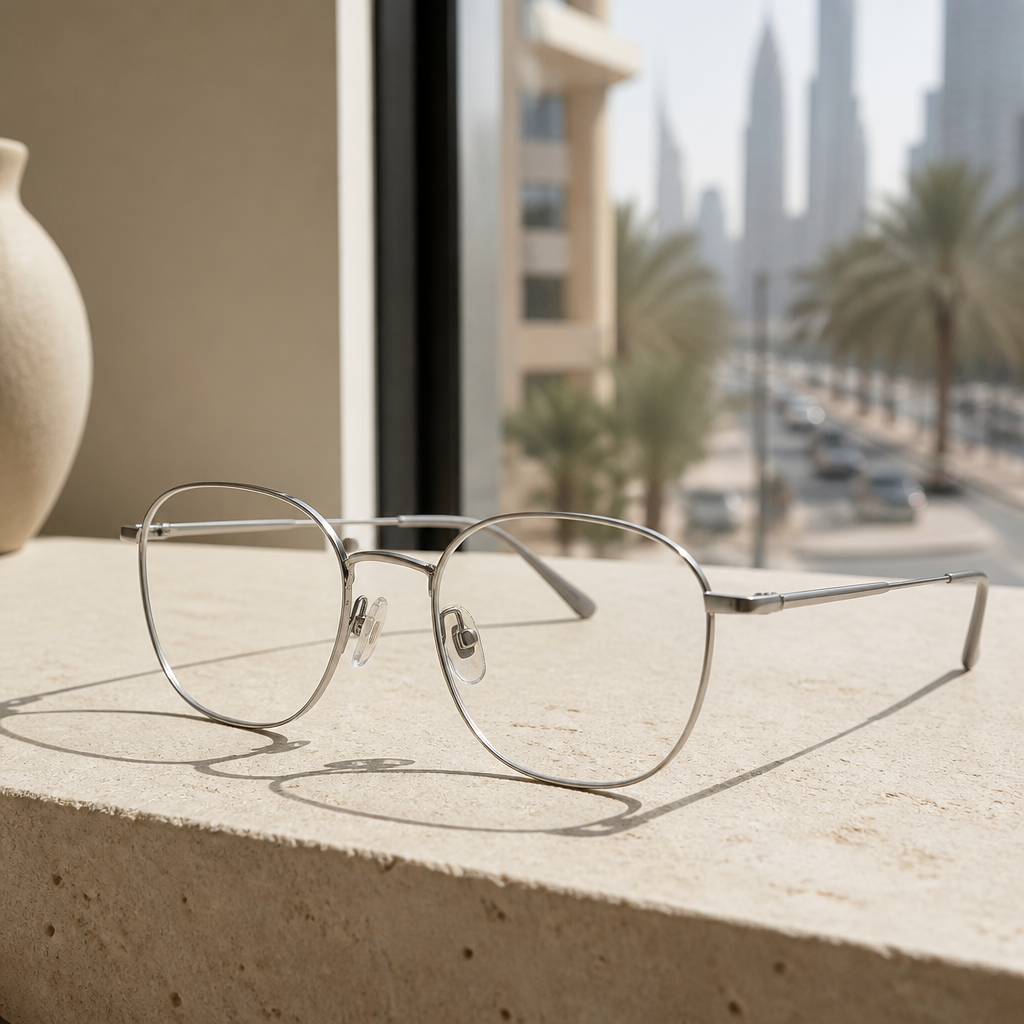
The weight gap is the part wearers notice first. Titanium is roughly 40 percent less dense than stainless steel, so a frame of similar size and wall thickness can be clearly lighter. Makers can also draw the wire thinner while keeping it stiff enough to hold its shape, and that is where the feeling of a frame almost disappearing comes from.
Pure Titanium Versus Beta Titanium
You will see the term beta titanium on some premium listings. These alloys are used where memory matters, such as temples that spring back into position after being bent slightly. The trade-off is a slightly springier feel, and beta titanium does not tolerate heavy-handed adjustment as well as more rigid versions do.
In practice, a frame with good memory is more forgiving if you sit on your glasses or lose them in a bag. A frame that feels stiff out of the box is not necessarily lower quality, but it will need a more careful adjustment at the optician.
Reading the Label Without Getting Lost
Brand catalogues often use the word titanium for the whole frame, even when only the front is metal. Look for whether the description covers the front, the temples and the hinge area separately. That detail tells you whether the frame is built as a single material or as a hybrid design.
Pro tip: Ask for the front and temple materials separately before you buy. Some designs use a titanium front with a different metal or plastic at the temple tips, and that split changes both weight and how the frame feels after a long day.
How Titanium Frames Feel on the Face
Weight is easy to measure. Comfort is harder, because it depends on how the frame sits over the nose and behind the ears. A titanium frame can feel light on a scale and still pinch if the pads and temples are set incorrectly.
The Bridge and Nose Pads
Many titanium designs use adjustable nose pads, and that is a feature worth paying for. Lighter frames put less downward force on the nose, so the pads matter less for holding the glasses up and more for spreading pressure evenly. If the pads leave marks or make your nose itchy, they can usually be reshaped by an optician.
A common mistake is to choose a titanium frame that is slightly too narrow at the bridge because it looks sharper in photos. The bridge is where a frame either sits securely or keeps sliding, and no amount of metal weight fixes a poor bridge fit.
Temples Over a Full Working Day
A heavy frame gradually shifts down the nose over several hours, and the temples begin to press harder against the sides of the head. A titanium pair tends to hold its position better, provided the temples are set to the right angle when you collect them. Ask the optician to check the angle after the first week of wear, because settling is normal.
Comfort in a frame comes from mass, pressure and fit working together. Changing one of them without the other two rarely solves the problem.
Flex, Memory and the Bend Test
A retail guide to titanium glasses lists resistance to bending among the main advantages of the material, and that matches what most people experience. A frame that flexes slightly and returns to shape is more comfortable than one that holds a permanent bend after a knock.
Enthusiasts are not unanimous on this. One long-running discussion among glasses wearers argues that the whole point of titanium is weight, and that some steels outperform it on toughness for their volume. Both points can be true, and the practical lesson is that titanium earns its place through comfort and weight rather than through being indestructible.
Durability in UAE Heat, Humidity and Sun
The UAE is hard on eyewear. Sweat, humidity, sea air in coastal areas, and temperatures inside parked cars all work against frames over time. Materials that look good on the day of purchase can lose their finish or change shape within a single hot season, and that is where titanium has a clear advantage.
Sweat, Humidity and Corrosion
Titanium is known for corrosion resistance, and a material-benefits guide to titanium describes it as corrosion free and resistant to heat and shock. In a climate with heavy sweat on the bridge and temples, that resistance means fewer worries about the metal pitting or the plating wearing through. Plated metal frames are the ones most likely to show this kind of wear, especially at the points where skin contact is constant.
The practical habit is simple. Wipe the frame with a soft cloth after a sweaty day, and avoid leaving it on a car dashboard or near a gym bag where moisture collects.
UV Protection Comes From the Lens, Not the Frame
This is the point most shoppers get wrong. A titanium frame does not block ultraviolet light, and a light-weight metal front can even tempt buyers to assume it offers more protection than it does. Sun protection comes from the lens coating and the lens material, so the lens specification matters as much as the frame material.
When you buy sunglasses or prescription lenses with sun tint for outdoor use in the UAE, confirm full UV protection on the lens label, then choose the titanium frame for comfort and durability.
Heat Inside a Parked Car
Leaving glasses on a dashboard in the afternoon is one of the fastest ways to damage a frame. Acetate can soften and warp in that kind of heat, which changes the fit and sometimes the way the hinges sit. Titanium generally holds its shape across the temperature swings you see in a Dubai summer, which is one reason it appeals to people who spend long hours in cars.
Designer Titanium Frames: What to Look For
Titanium is now used across the design houses we stock, from Ray-Ban's optical lines to the more technical frames from Porsche Design. Because so many brands use the material, the metal alone no longer tells you much about quality. The details around the metal are where the real differences show up.

Reading a Spec Sheet
Good product listings give more than a frame size. The Ray-Ban Round Titanium Optics listing, for example, gives a bridge size of 21 mm and a lens diagonal of 53 mm, and those two numbers are the most useful for judging fit. A bridge that is too wide will sit low, and a lens diagonal that is too large for your face will make the frame look oversized and pull on the temples.
Compare these measurements with a frame you already wear comfortably. Matching the bridge and lens width is a far better guide than matching the style name.
Hinges, Screws and End Pieces
The hinge is where titanium frames most often loosen, and a well-built hinge keeps the temples at a consistent angle for years. Look for solid end pieces and a hinge that feels firm rather than wobbly when you open it. Small screws are easy to lose, so ask whether spares are available before you commit to a pair.
Finishing matters too. A brushed or matte titanium surface hides fingerprints and light scratches better than a high polish, which makes it a more practical choice for daily wear in dusty or sandy conditions.
Fit First: Measuring Before You Buy
Most titanium frame returns come down to fit rather than material. A buyer falls for the weight and the finish, orders online, and then discovers the glasses sit too high or too low on the nose. Measuring first saves time and avoids the frustration of adjusting a frame that was never the right size.
Checking the Frame You Already Own
Take a pair you wear comfortably and measure the bridge width, the lens width and the temple length. Compare those figures with the specification on the product page, and treat differences of a few millimeters as meaningful. A frame that is a little narrower at the bridge often sits better than one that is a little wider, because gravity is working against the wider design.
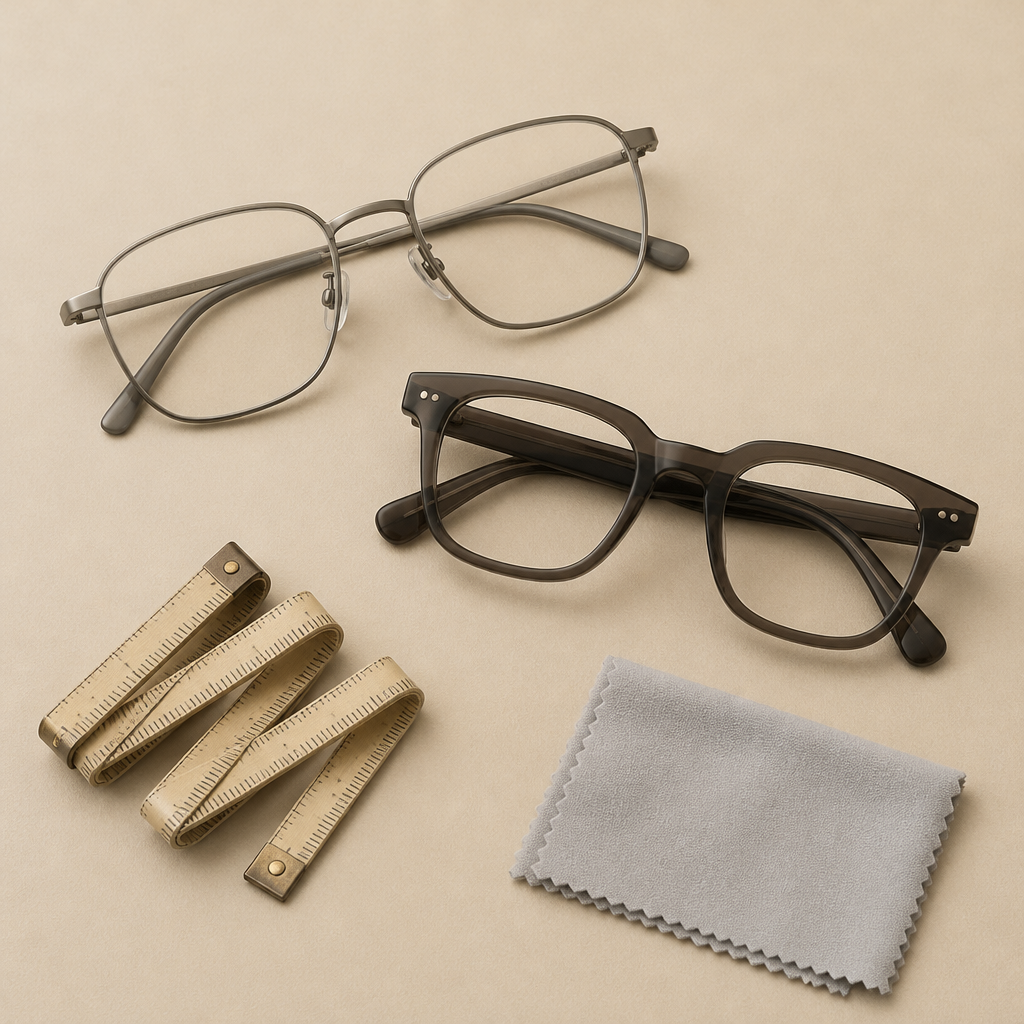
Pro tip: Measure your current glasses on a flat surface with a ruler, not by eye. Record the bridge, lens width and temple length in a note on your phone, so you can compare them with every listing you open.
What Titanium Lets You Get Away With
Because titanium is light, it forgives some small fit errors that heavier frames would punish. A slightly larger lens may feel acceptable because the frame does not drag the nose down. That tolerance has limits, though, and a poor bridge fit will still cause slipping, so use it as a margin rather than a reason to ignore measurements.
Titanium Compared With Other Frame Materials
Titanium is not the right answer for every face or every budget. Stainless steel and cellulose acetate remain popular for good reasons, and the choice depends on how you wear your glasses and what you want them to do for you.
| Material | Where It Wins | Where It Falls Short |
|---|---|---|
| Titanium (alloy) | Very light, corrosion resistant, holds its shape in heat, comfortable for all-day wear | Can feel springy in some beta alloys, and the price is higher than most metal alternatives |
| Stainless steel | Strong, slim profiles, often lower cost, widely available in classic styles | Heavier than titanium, and plated finishes can wear in sweaty, humid conditions |
| Cellulose acetate | Rich colors and bold shapes, comfortable fit on many faces, easy to adjust with heat | Heavier, can soften and warp in a hot car, and the finish can craze over several years |
In practice, titanium suits wearers who spend long hours in their glasses and want the weight to disappear. Acetate suits people who want bold color and a statement shape, and who keep their glasses out of the car. Steel suits buyers who want a slim, classic look at a lower price point.
Buying and Caring for Titanium Frames in the UAE
Buying a titanium frame is only half the job. The rest is choosing an authentic pair from a trusted source, getting the lenses right and keeping the frame in good shape through the humid months. We source our designer eyewear directly from manufacturers, so the frame you receive is the one the brand made, with no middleman markup and no grey-market surprises.
Where Titanium Frames Go Wrong
The most common problem is a bent temple from a rushed grab off a table or a shelf. Titanium resists that bending better than many materials, but it is not immune, and forcing a temple back can strain the hinge. Take the frame to an optician for any significant adjustment rather than working on it yourself.
The second problem is the lens. Replacing a damaged lens in a titanium frame is often cheaper than replacing the whole pair, so keep the frame and lens specification in your records.
Cleaning and Storage in a Humid Climate
Clean the lenses and frame with lukewarm water and a mild soap, then dry them with a microfiber cloth. Store them in a hard case rather than a pocket or a glovebox, and let them air out after a sweaty workout. These small habits do more to protect a titanium frame than any special product.
Our delivery covers the UAE for free, and we accept cash on delivery. Our returns window is seven days, so you can wear a new pair for a few days and decide whether the fit is right. Details are on our site at sunglasshub.com.
Pro tip: Ask your optician to check the nose pads and temple angle at the first fitting and again after two weeks. Titanium holds its shape well, but the initial settling is when most fit problems are fixed for good.
Frequently Asked Questions
Are titanium eyeglass frames really lighter than steel?
Yes, in most cases. Titanium is considerably less dense than stainless steel, so a frame of similar size and thickness usually weighs less. The actual difference also depends on the design, the thickness of the wire and the finishing.
Do titanium frames protect my eyes from the sun?
No, the frame material does not block UV light. Sun protection comes from the lens. For outdoor use in the UAE, check that the lenses carry full UV protection, whatever the frame is made from.
Is titanium a good choice for sensitive skin?
Titanium is generally considered a lower-risk choice for people with metal sensitivities. If your reactions are severe, ask the retailer about the specific alloy and any plating used on the frame before you buy.
Why does my titanium frame keep sliding down my nose?
The most common cause is a bridge that is too wide for your nose, or nose pads that are not adjusted to fit. Light frames still need the right bridge size and a proper fit at the optician to stay in position.
How should I clean a titanium frame after a sweaty day?
Rinse the frame in lukewarm water with a mild soap, dry it with a microfiber cloth, and store it in a hard case. Avoid leaving it on a dashboard or near moisture, because heat and humidity are what wear finishes down fastest.
Are designer titanium frames worth the higher price?
They are worth it if you wear your glasses for many hours a day and value weight and comfort above a bold look. For occasional wear, a lighter-priced pair may serve you just as well, so match the frame to how often you actually wear it.
Have you switched to titanium frames, or are you still deciding between metal and acetate? Share your experience with weight, fit and durability in the comments, because real wear in the UAE climate tells us more than any spec sheet.


