


Tinted Eyeglasses UAE: Prescription Frames as Fashion
Walk into any optical counter in Dubai and you will notice the same shift: people who used to order a plain pair of prescription frames now ask about colour. Tinted eyeglasses in the UAE have moved well past the old idea of a grey lens for driving. Rose, amber, green and mirrored finishes now sit on frames that carry a prescription, so the glasses correct your vision and make a statement at the same time. The real question is no longer whether you can tint a prescription. It is which tint, which frame and which lens specification will still look right after a long summer of heat and bright glare.
Table of Contents
- Quick Takeaways
- Why Tinted Prescription Frames Are Trending
- Tint Colours That Work in UAE Light
- Photochromic Versus Fixed Tint in Heat
- Frame Shapes That Carry a Tint
- Comparing Tint Options Side by Side
- Ordering Tinted Prescription Frames Online
- Frequently Asked Questions
- References
Quick Takeaways
| Key Insight | Explanation |
|---|---|
| Choose the tint for your skin tone first | A rose or amber lens changes how your face reads in photos and across a table, so test the colour against your complexion in daylight before you commit. |
| Grey and brown keep colour accurate | These tints dim light without shifting colour, which makes them the safest choice for driving and for everyday wear in Dubai's glare. |
| Photochromic lenses underperform in heat | Lenses that darken with UV tend to stay lighter in high temperatures and behind a car windshield, so a fixed sun tint is often the better buy for hot-climate use. |
| Bold colours belong to low-light and evening use | Yellow and light rose tints add contrast on overcast days and at night, but they do little against strong midday sun. |
| Frame shape decides how much tint shows | Oversized acetate and thick frames give a tint room to read as a feature, while thin wire frames make pale lenses look washed out. |
| Check the lens specification, not only the colour | Ask for UV400 protection on the label, confirm the lens index for your prescription strength, and check the return terms for made-to-order lenses before you pay. |
Why Tinted Prescription Frames Are Trending
For years, tinted lenses were a practical product. Grey reduced glare, brown added contrast, and nobody expected much more. That has changed because designers now treat the lens as the most visible part of a frame, and buyers have followed them. One recent fashion editorial on the tinted glasses trend describes a mix of 1980s-coded rainbow wraparounds and sporty, technical styles, which tells you how wide the category has become.
Tinted prescription frames now compete with sunglasses for attention, not just with clear-lens frames. For a buyer who wears glasses from morning meetings to dinner, a tint is the only way to change the look of a pair without buying a second pair.
From fashion accessory to prescription staple
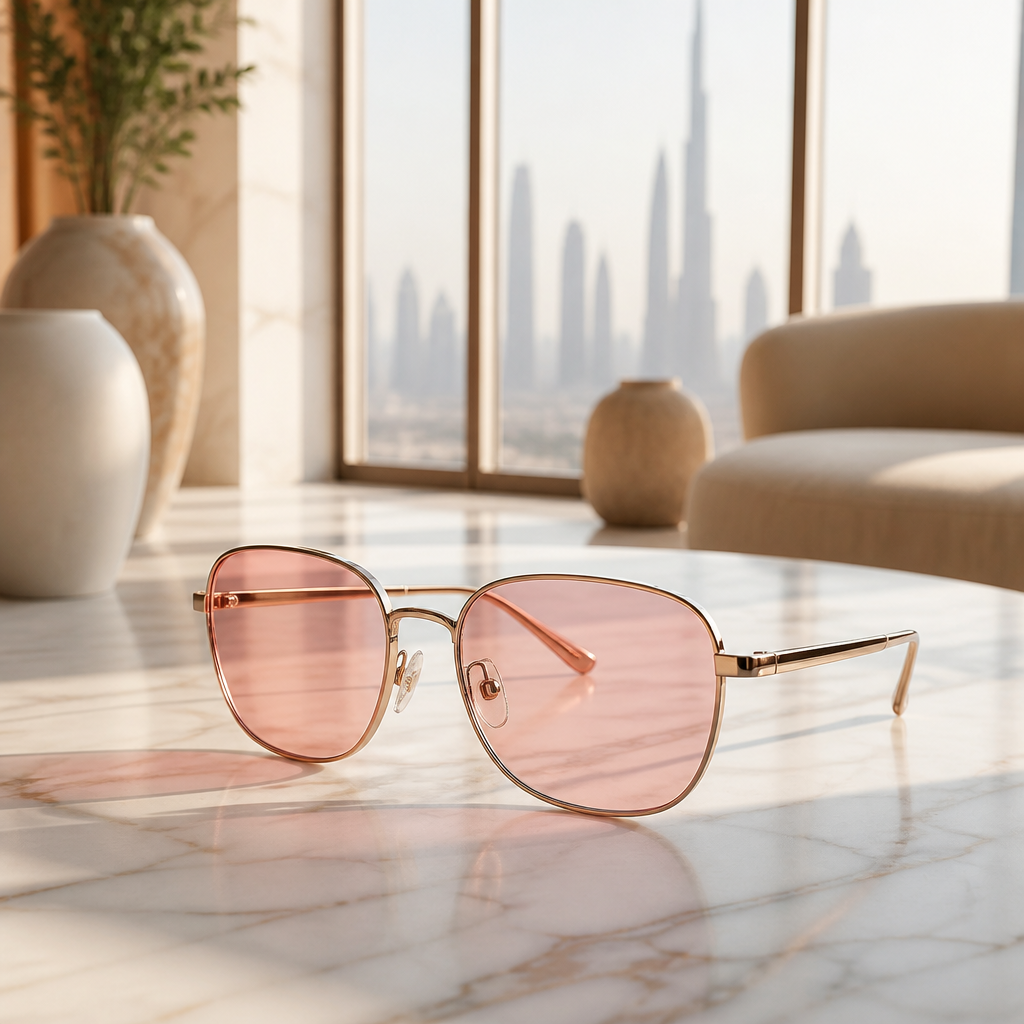
Recent tint coverage for 2026 highlights pink tinted glasses and yellow sunglasses as a Y2K-leaning look that works from day to night. That is the real shift: tints are now chosen for mood and outfit first, and for lens function second. A pair that looks right at a desk and in a car is more useful than one that only works in direct sun.
In practice, most of our customers who start with a tinted prescription already own a clear pair. They want a second frame that looks like a deliberate choice, not a backup. A common mistake is buying a tint purely for the trend, then finding it too dark for indoor use or too pale for the beach.
Why the UAE market responds to colour
Many people in the UAE already wear sunglasses for most of the year, so eyewear is part of daily dress rather than a seasonal purchase. That makes a tinted prescription pair easier to justify: you wear it for vision, you wear it for style, and you get both without carrying two sets of glasses. Customers who would never pick a loud frame will often accept a soft brown or rose lens, because it reads as a neutral with personality.
A tinted lens is the one part of a frame that changes how everyone else sees your face, so choose it for your skin tone before you choose it for the trend.
Pro tip: Take the frame outside before you finalise the tint. Look at it in shade and in direct light, then check it against a white shirt, because the same colour can look soft in a showroom and sharp under midday sun.
Tint Colours That Work in UAE Light
Not every tint behaves the same way in strong light. Some colours reduce brightness evenly and keep the world looking natural, while others change how colour appears to you. Choosing well means matching the tint to the hours you will wear the glasses, not just to the outfit on the day you buy them.
Grey and brown for everyday contrast
Grey is the most neutral option. It cuts brightness without shifting colour much, which makes it the default for driving and for long days outdoors. Brown and amber add contrast, so road signs, sand edges and screens look sharper, and many buyers find they prefer it after a few weeks of wear.
A practical point: a dense grey or brown on a prescription lens can feel very dark indoors. If you work in offices with bright lighting, ask for a medium density rather than the darkest option, or keep a clear pair for indoor hours.
Green and gradient for a softer look
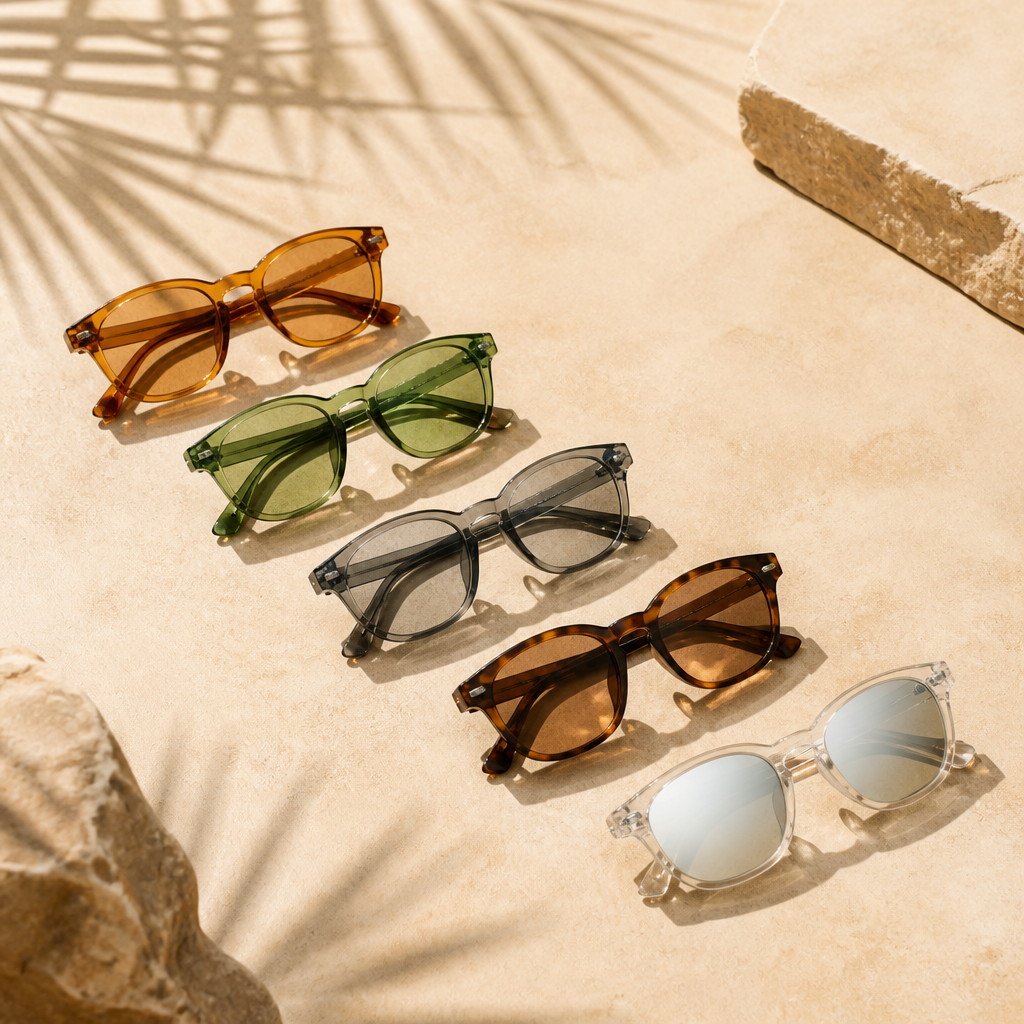
Green tints sit between grey and brown. They reduce glare comfortably and give a slightly vintage tone that suits round and browline frames. Gradient tints, darker at the top and lighter toward the bottom, work well for people who want a fashion effect without losing visibility in the lower field.
In our experience, gradients look best on frames with a clear top rim, because the colour shift follows the shape of the eye. On a fully enclosed acetate frame, the gradient can look like a smudge rather than a design choice.
Rose and yellow for bold, low-light style
Rose and yellow tints are the fashion-forward end of the range. They add warmth and contrast on overcast days, in the evening, and under artificial light, which is where many people want a bolder frame to shine. Yellow in particular brightens a dull scene, but it does very little against strong midday sun.
A common mistake is choosing a pale yellow for a sunny desert drive. It will look striking in the shop, then leave you squinting. Save the bright tints for evenings, travel in cooler months and outfits where the glasses are part of the styling.
Photochromic Versus Fixed Tint in Heat
Photochromic lenses, the kind that darken outdoors and clear indoors, look like the obvious answer for anyone who switches between environments. In the UAE, however, they do not always deliver the result buyers expect. The lens activates with UV light, and it tends to stay lighter when it is hot and when it sits behind a windshield, which blocks much of the UV that triggers the change.
Why photochromic lenses underperform in the heat
Warmth reduces how dark a photochromic lens gets, so a pair that looks convincing in a cool shop can seem only moderately tinted on a summer afternoon. Many people then assume the lens is faulty, when the lens is simply behaving as designed. The same effect appears inside a car, where the windshield filters the UV that the lens needs to darken fully.
This does not mean photochromic lenses are a poor product. They suit people who spend most of their time walking outdoors in mild weather, or who want one pair for both sun and indoor work. They are a weaker match for drivers who want reliable sun protection behind the wheel.
Where fixed tints still win
A fixed sun tint is the same darkness whether you are in a car, on a terrace or in a restaurant with bright windows. That consistency is why fixed tints remain the practical choice for driving and for anyone who needs predictable glare control. You also get a clearer choice of colour, since fixed tints come in a wider range than most photochromic options.
The trade-off is flexibility. If you walk from air-conditioned rooms into full sun many times a day, a fixed tint means carrying a clear pair for indoor hours. Decide which situation dominates your week before you pay for the lens.
Frame Shapes That Carry a Tint
A tint is only as strong as the frame that holds it. The same rose lens can look like a bold design on one shape and like a faded accident on another. Frame choice also affects how much light reaches the eye from the sides, which matters for comfort in strong sun.
Oversized acetate for maximum tint impact
Oversized acetate frames give a tint the most room to read as a deliberate feature. Thick, glossy acetate in tortoiseshell or solid colour pairs well with brown, grey and gradient lenses, and the larger lens surface shows the colour clearly. These frames also cover more of the eye area, so they suit people who want extra shade without switching to a sport style.
When you choose a large frame, check the weight. A heavy acetate frame with a strong prescription and a dense tint can sit uncomfortably on the nose, especially in humid weather, so ask for a fitting before you order.
Round and retro frames with pastel lenses
Round and retro shapes are the natural home for pastel tints. A soft rose or light green lens in a round metal or acetate frame looks intentional and gives the wearer a clear retro identity. These frames work best with lighter tints, because their smaller lens area can make a heavy colour look flat.
A practical note: a thin metal round frame will show lens colour more subtly, which can be a good choice for workplaces where a bold look is not appropriate. You get the tint without the statement.
Wraparounds and sport shapes for glare
Wraparound and sport shapes are where tints do their most functional work. The curve blocks side light, and a fixed grey or brown lens controls glare on bright roads and open terraces. Brighter-coloured wraparounds, which fashion editorials have linked to the 1980s revival, add a playful tone to a technical silhouette.
Wraparounds are less common on prescription frames, so check the lens curve with your optician. A strongly curved prescription lens may need a special lens design to avoid distortion at the edges.
Comparing Tint Options Side by Side
Most buyers narrow their choice to three approaches: a fixed sun tint, a photochromic lens, or a gradient fixed tint for a fashion look. Each suits a different daily routine, and the trade-offs are easy to miss when you only see the colour on a screen.
The table below compares these options for people wearing tinted eyeglasses in the UAE. Use it to match the lens to your hours outdoors, your driving habits and the frame you have chosen.
| Tint option | Best use in the UAE | Main trade-off |
|---|---|---|
| Fixed grey or brown sun tint | Driving, outdoor work and all-day glare control | Too dark for indoor use, so you may need a second clear pair |
| Photochromic lens | Walking between indoor and outdoor spaces in mild weather | Darkens less in heat and behind a windshield, so it is weaker for driving |
| Fixed gradient or rose tint | Fashion-led wear, evenings and outfits where colour matters | Limited glare control in strong midday sun, and a gradient can look uneven on some frames |
The comparison points to one clear rule. If you drive a lot, choose a fixed grey or brown sun tint and treat the fashion colour as your second pair. If you mostly move between indoor and outdoor spaces on foot, a photochromic lens is a practical single pair, provided you accept that it will not darken fully in the car.
Reading a tint label before you buy
Look for UV400 or 100% UVA and UVB protection on the product information, since colour alone does not show how much UV the lens blocks. Ask how dark the tint is, using the stated category or visible light transmission, rather than relying on the picture. A pale rose lens may look bold but can still block very little light, which matters for glare control.
Ordering Tinted Prescription Frames Online
Buying a tinted prescription online works well when you prepare the details properly. Most problems come from a missing measurement or a tint chosen without a clear use case, not from the lens itself. Treat the order as a short spec sheet, then check it against your prescription.
Details to send with your prescription
Send your full prescription, including sphere, cylinder, axis and pupillary distance, and state the lens type you want, such as single vision or progressive. If you have a strong prescription, ask for a high-index lens so the tinted edge stays thinner. Include the tint colour and density in the order notes, so the optician does not have to guess.
In practice, a common mistake is ordering a progressive lens in a deep gradient without checking that the tint and design suit each other. Ask for guidance on that combination, because the reading zone can look different once colour is added.
Delivery, cash on delivery and returns
Sunglass Hub offers free delivery across the UAE, cash-on-delivery payment and 7-day returns. Those options make it easier to try a tinted frame without committing upfront, but made-to-order prescription lenses can carry different return terms from ready-made frames. Read the returns section for your specific order before you pay.
Pro tip: Before ordering, write down the three situations you will wear the glasses most, such as driving, the office and evenings out. Choose the tint that handles the most hours, then add a second tint only if you have a clear use for it.
Frequently Asked Questions
Can I get any tint colour on a prescription lens?
Most common tints, including grey, brown, green and rose, are available on prescription lenses. Gradients and very pale shades can be more limited depending on the lens type and prescription strength, so confirm the options for your specific lens before you order.
Are tinted prescription glasses suitable for driving in Dubai?
A fixed grey or brown sun tint with UV protection is the practical choice for driving. Avoid very dark or mirrored lenses at night, because they reduce the light reaching your eyes when visibility is already low.
Do photochromic lenses work well in the UAE heat?
They darken outdoors, but they tend to stay lighter in high temperatures and behind a windshield. They suit walking between indoor and outdoor spaces, but a fixed sun tint is more reliable for driving.
Does a tinted lens change how I see colour?
Yes, to some extent. Grey and brown keep colours closest to natural, while rose, yellow and green shift how colours appear, so test a colour in daylight and indoors before deciding.
Should I buy a clear pair as well as a tinted pair?
For most people with a dark sun tint, a clear pair is useful for indoor hours and night driving. A second tinted pair in a fashion colour is then a choice rather than a necessity.
If you have worn a tinted prescription pair through a UAE summer, tell us which tint and frame shape held up best for you.
We would love your feedback and any insights you would share with others. What perspective would you add?


