


Wraparound Sunglasses UAE: Full Coverage for Dubai Sport
Most sunglasses sold in the UAE are designed for a city stroll, not a 6am run when the sun is already climbing or an evening ride with light bouncing off glass towers. That gap is why wraparound sunglasses UAE buyers ask about are no longer a niche purchase. A curved lens that wraps from brow to temple blocks the sideways light that a flat frame lets straight in. In this guide we cover how wraparound frames perform in Dubai conditions, how to judge fit, which lens features matter, and how to buy an authentic pair without overpaying.
Table of Contents
- Quick Takeaways
- Why Wraparound Frames Suit the Dubai Sun
- Choosing a Wraparound Fit for Running and Cycling
- Sport Sunglasses Dubai: Matching Frames to Your Activity
- Lens Colour and Polarisation for Desert Glare
- Full Coverage Eyewear UAE Beyond the Wrap
- Wraparound Styles Compared
- Buying Authentic Wraparound Sunglasses in the UAE
- Frequently Asked Questions
- References
Quick Takeaways
| Key Insight | Explanation |
|---|---|
| Wraparound frames beat flat frames for side light | Light reflecting off windows, pale pavement and water reaches your eyes from the sides, where a flat lens leaves you exposed. |
| Fit matters more than the brand name | A frame that slides on sweat is useless. Shake your head and walk briskly in the pair before you commit. |
| Choose polarisation for glare, not darkness | Polarised lenses cut reflected glare from wet roads, glass and water. A darker tint alone does nothing about glare. |
| Match the frame to the sport | Runners need light, ventilated frames. Cyclists need a secure wrap that works with a helmet. Racquet players need a stable fit with a clear view upward. |
| Check authenticity before you check the price | Genuine frames have crisp branding, consistent model codes and smooth hinges. A premium pair priced far below the usual range is a warning sign. |
| Keep a second pair for low light | Dawn, dusk and hazy days call for a lighter lens. One dark pair rarely covers every hour you train. |
Why Wraparound Frames Suit the Dubai Sun
The sun in the UAE is not only overhead. For much of the day it sits low and bright, and in a city full of glass, pale stone and polished metal, a large share of your exposure arrives sideways. A flat lens sits in front of your eyes and leaves the gap at your temples wide open. A wraparound lens closes that gap.
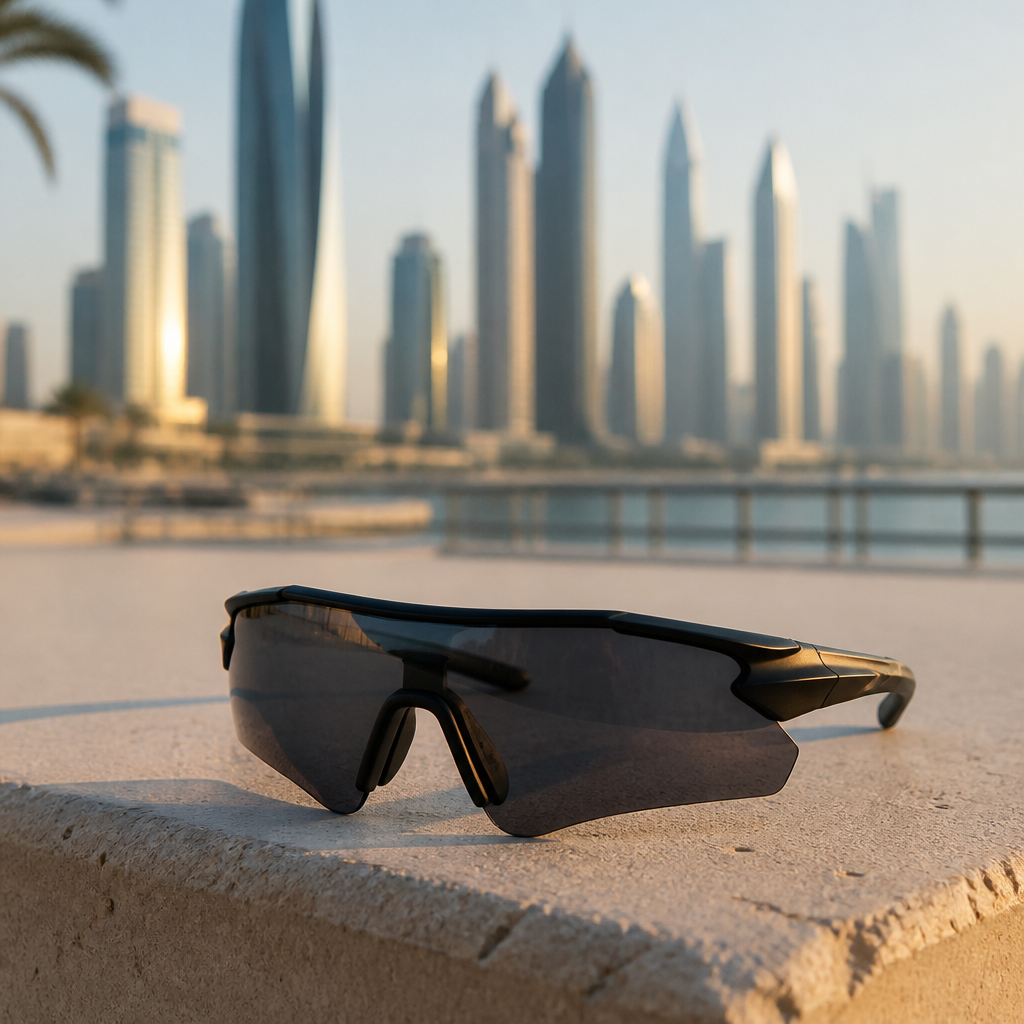
In practice, the difference shows up on the first long run of the morning. With a flat frame, you squint against the glare hitting the side of your face and keep adjusting your head. With a curved frame, the light stops at the edge of the lens and your attention stays on the path ahead.
Peripheral Light Off Glass and Pale Surfaces
Reflected light is the main reason people end up with headaches after a long session outdoors. Sunlight bouncing off a car roof, a wet road or a building façade reaches the eye from angles a front-facing lens never covers. Wraparound frames reduce that stray light and, when paired with a quality UV filter, keep peripheral exposure under control.
A common mistake is assuming a dark tint does the same job. Darkness only reduces the total amount of light. It does nothing about where that light comes from, so a dark flat frame still lets glare reach you from the side.
Wind, Sand and Sweat
Fine dust is part of life in the Emirates, and it travels on the wind as much as on the road. A tight wrap keeps grit away from your eyes during a cycling descent or a fast walk across an open area. It also means less squinting, which is tiring over a long outdoor session.
Sweat is the other problem. Heavy perspiration during a summer workout can make a loose frame slide down the nose, so you end up pushing it back every few minutes. Look for grippy nose pads and temples that hold without pinching, and test the fit with a brisk walk before you rely on it.
Pro tip: Do a 10-minute test at home with the sunglasses on. Shake your head side to side, nod forward and bend down to pick something up. If the frame slides or lifts in any of those movements, it will not stay put during a run.
Choosing a Wraparound Fit for Running and Cycling
Fit is where most wraparound purchases go wrong. A frame can look perfect on the shelf and still fail in the first kilometre because the temples are too long, the bridge pinches, or the lens sits too close to your lashes. Start with the size guidance on the product page, then judge the frame after ten minutes of movement.
Independent reviewers who test sport sunglasses often spend hundreds of hours with a shortlist before naming a winner. That is a useful model for your own testing. A pair that feels right in a changing room may still rub or drift once you have sweated through a full training block.
Temple Length and Grip
Temples on sport wraps are angled to hold the frame behind the ear, and that angle is what stops the frame from bouncing. If the temple tips are too long, they press into the skull and cause discomfort after an hour. If they are too short, the frame can slide back when you bend forward on a bike.
In our fitting experience, the best-fitting pairs have a soft grip on the temples and even pressure across the nose pads. A frame that pinches at the bridge leaves marks, while one that rests mainly on the cheekbones will drift on the first steep climb.
Lens Curvature and Distortion
A strongly curved lens gives the widest coverage, but it can distort the view at the edges if the curve is too steep for your face. This shows up as a slight wobble when you turn your head, which is unpleasant on descents and fast corners. Good sport wraps manage this with quality optics and a shape that sits close to the face without squeezing it.
Check distortion by holding a straight edge, such as a door frame or a shelf edge, and moving your head slowly from side to side. If the line bends or shifts as it passes through the lens, the optics are not ideal for fast movement. The test takes under a minute and is worth doing before any purchase.
Pro tip: If you wear prescription glasses, ask whether the wrap can take an optical insert before you buy. Some curved frames cannot accept one, and you want to know that before you pay.
Sport Sunglasses Dubai: Matching Frames to Your Activity
Sport sunglasses are not one category. A frame built for a sunrise run has different priorities from one built for a midday ride or a session on the padel court. Buying one pair for everything usually means compromising on the activity that matters most to you.
Start with the sport you do most often, then add a second pair for anything that changes the light or the intensity. The sections below cover what to look for in each case.
Early Morning Running
Runners need lightweight frames that stay put without feeling heavy. Look for a nylon or lightweight composite frame and a lens that lets enough light through for the early hours. A very dark tint at dawn makes the path hard to read, especially where kerbs or uneven paving sit beside a shaded area.
Ventilation matters too. Vents or open temples let heat escape, which reduces fogging on the inside of the lens during hard efforts. Frames without any airflow tend to steam up on long runs, and that is when people start taking them off.
Cycling and Group Rides
Cyclists benefit most from full wrap coverage. Wind pressure at speed pushes dust, grit and insects toward the eyes, and a tight curve blocks a good share of it. A lens with a lighter upper zone helps you read the road ahead when you are hunched over the handlebars.
Choose frames that work with a helmet. Some wraps have temples that clash with helmet straps or push the frame upward when the helmet is fastened. Try the pair with your own helmet before paying, if the store allows it.
Racquet Sports and Boating
Padel and tennis players look for stability and a clear view upward, because the ball often travels above eye level. Frames with a deeper lens and a secure fit suit these sports better than extreme curves that narrow the top of your view. Boating and water sports need polarisation to cut the reflected glare from the surface, which is a different job from the broad coverage you need on the road.
Lens Colour and Polarisation for Desert Glare
Lens choice changes what you see as much as how much light you block. In the UAE, the main problem is glare from flat, bright surfaces, such as a road after rain, a pool deck or the sea. The right lens treatment handles that glare directly rather than simply making the world darker.
Many buyers hear "polarised" and assume it means "dark." It does not. Polarisation filters out horizontally reflected light, which is what makes a wet road or a glass façade look blinding, and it leaves the rest of the scene largely untouched.
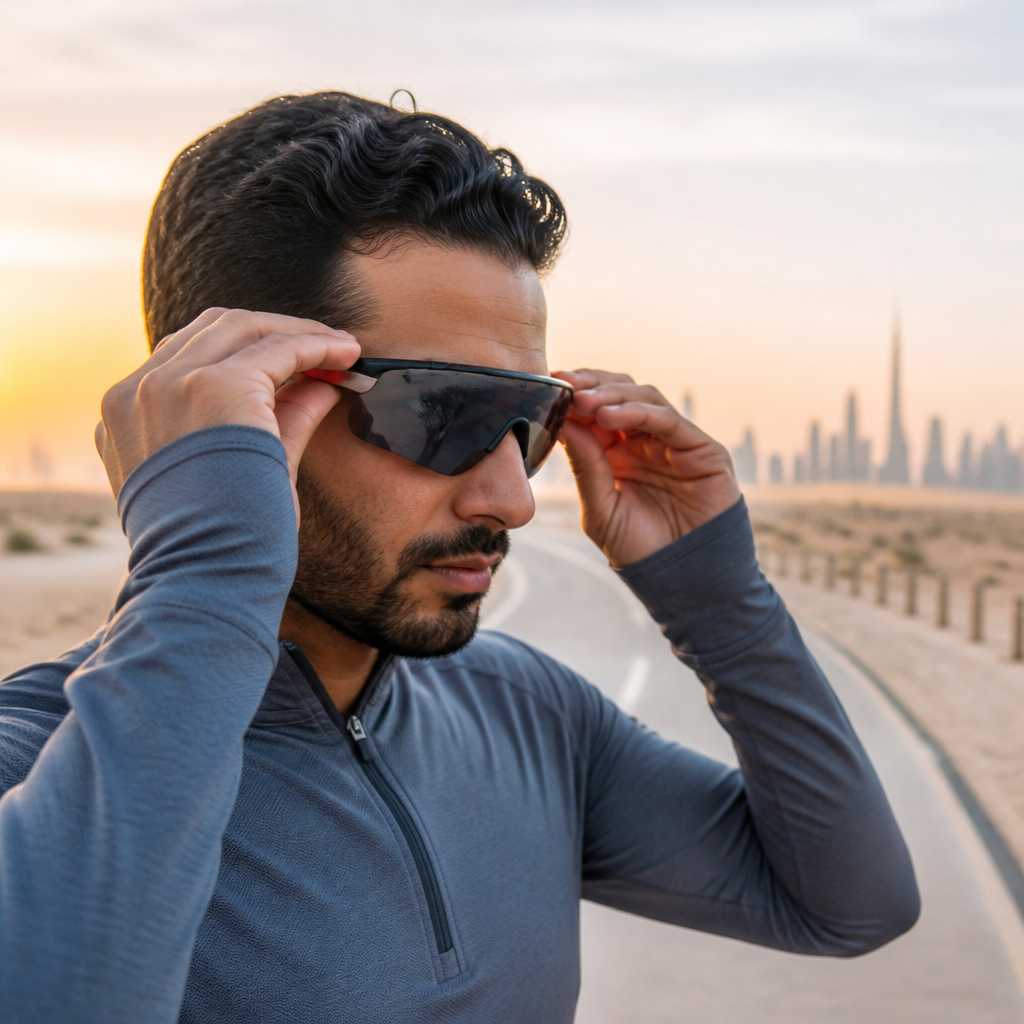
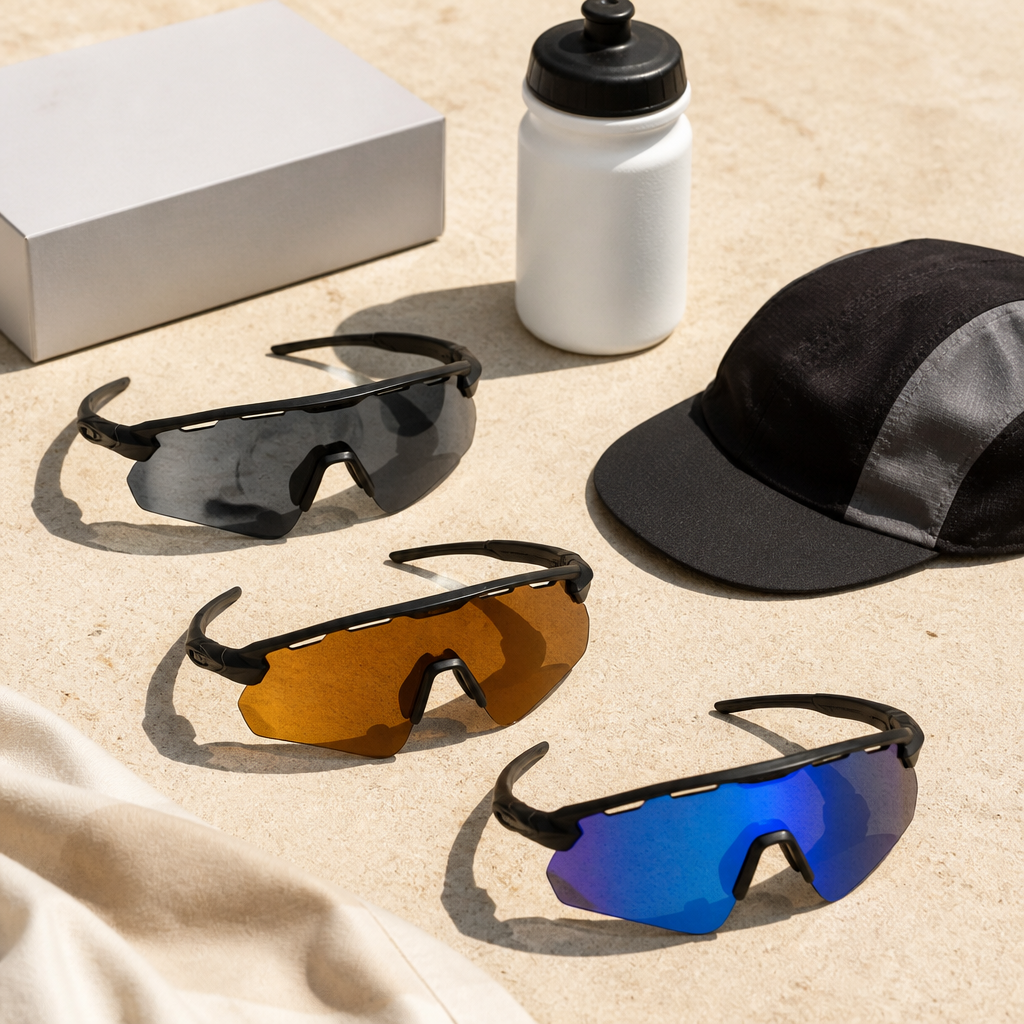
Tint colour matters too. Grey and brown tints keep colours natural, which suits everyday driving and mixed activity. Amber and rose tints increase contrast in haze or low light, which helps at dawn or in the evening.
Polarised Lenses on Water and Glass
Polarisation earns its place on the water and near glass. On a boat or beside a pool, it removes the sheen that otherwise hides what lies beneath the surface. Driving through the city after rain also shows the benefit, since wet tarmac reflects strongly.
The trade-off is that polarised lenses can make some LCD screens, including certain dashboard and instrument displays, harder to read at particular angles. Check your screens with the lenses on before you rely on them in a car. It is a small test that avoids an annoying surprise.
Tints for Dawn, Dusk and Overcast Days
A single dark lens is a poor choice for the hours when the sun is low or hidden behind haze. A lighter amber or yellow-tinted lens lifts contrast and helps you judge kerbs, steps and other riders. If you train before sunrise or after sunset, keep a second pair with a lighter tint.
Pro tip: Choose a grey or brown lens for all-day wear and a light amber or rose lens for low-light sessions. Two pairs cover almost every condition you will meet across the Emirates.
Full Coverage Eyewear UAE Beyond the Wrap
Full coverage does not always mean a classic wrap. Shields and visors cover a wide field with a single lens, and some buyers prefer that look for casual wear. Knowing the difference helps you choose the right shape for the job rather than the most fashionable one.
Coverage works as a spectrum. A standard wrap covers the sides, a shield extends one lens across the full width of the face, and an oversized frame covers the brow and cheek. Each step up gains protection but usually costs ventilation and some weight.
The best sunglasses are the pair you wear every time you leave the house, not the pair that waits in a drawer for the perfect occasion.
Shield and Visor Styles
Shields suit riders and runners who want a single unbroken lens. They block wind and debris well, but they can feel warm in heavy heat because there is less ventilation. For casual city wear, a shield pairs sharply with a simple jacket and a watch.
Visors fill a similar role for people who train outdoors regularly. Check the brow line of any visor, because a frame that sits too low can block the upper part of your view when you look up at a ball or a road sign.
Optical Wraps for Prescription Wearers
If you need correction, a plain wraparound will not do the job unless it accepts an optical insert or is made with prescription lenses. Ask for the lens curve and frame measurements before ordering, since they determine whether an insert will sit flat. Some people keep a sport frame with an insert system for training and a separate pair for daily errands.
Wraparound Styles Compared
Three styles cover most buyers in the UAE, and each suits a different routine. The table below sets them side by side so you can see where each one excels and where it falls short. The core question is how much side protection you need compared with how much heat and weight you can tolerate.
For anyone who trains outdoors several times a week, the full wraparound sport frame is usually the best starting point. For occasional riders and people who mostly drive, a shield or a flat frame with side coverage can be enough.
| Style | Best For | Main Trade-off |
|---|---|---|
| Full wraparound sport frame | Running, cycling and any outdoor session with reflected light from the sides | Can feel snug at first and may run warm in heavy heat |
| Shield or single-lens visor | Cycling, wind protection and casual city wear | Less ventilation, and the brow line must suit your face |
| Standard flat fashion frame | Short walks, errands and evenings out when style comes first | Leaves the temples and sides exposed to reflected light |
Flat fashion frames still have a place. They suit short walks and evenings out when the goal is style first. Just do not expect them to handle sustained exposure to reflected light during training.
Buying Authentic Wraparound Sunglasses in the UAE
Buying a wraparound frame online is where most people take the biggest risk. Sport styles are popular, and counterfeit copies circulate widely, often using photos lifted from genuine listings. A careful buyer checks a few specific details before paying anything.
Sunglass Hub sources its frames directly from manufacturers, so there is no middleman marking up the price or introducing uncertain stock. You still benefit from knowing what a genuine pair looks like, because that knowledge protects you wherever you shop.
How to Check Authenticity Before You Pay
Start with the frame itself. Genuine branding is crisp, with clean engraving or printing on the temples and a consistent model code inside the frame. Lens markings should be precise, and the hinges should move smoothly without rattling or uneven gaps.
Price is the next signal. A premium wraparound priced far below the usual market range is a warning sign, because genuine materials and optics do not drop that far. Look at the packaging, case and documentation as well, since counterfeit versions often get these details wrong.
Delivery, Cash on Delivery and 7-Day Returns
Sunglass Hub offers free delivery across the UAE, cash-on-delivery payment and 7-day returns. For sport frames, the return window matters most when you try a pair at home, walk, shake your head and discover the fit is wrong. Test the pair during the first few days and keep the packaging and tags until you are sure.
Measure your current frames before ordering. Compare the lens width and temple length printed on your old pair with the size chart on the product page. A few millimetres of difference can change how a wrap sits, especially during sport use.
Pro tip: Keep the original case, box and tags together, and note the date you received the pair. Returns move faster when the frame, packaging and documents are all in one place.
Frequently Asked Questions
Are wraparound sunglasses good for running in the UAE?
Yes, for most outdoor runners they are the best option because they block reflected light from the sides and stay secure during movement. Choose a lightweight frame with ventilation and a lens tint suited to early morning light. Test the fit with a brisk walk and a few head movements before you run in them.
Do I need polarised lenses for driving in Dubai?
Polarised lenses are useful for driving because they reduce glare from wet roads, glass buildings and the bonnets of other cars. They are not a requirement, but they make a noticeable difference on bright, reflective days. Check that your dashboard screens remain readable with the lenses on.
Can I get a wraparound frame with prescription lenses?
Some wraparound frames accept optical inserts, while others cannot because of the curve of the lens. Ask about the lens curve and frame measurements before you order, so you know whether a prescription insert will sit correctly. Sport frames with an insert system can be a practical route for training and daily use.
How can I tell if a wraparound pair is authentic?
Look for crisp branding, a consistent model code inside the frame, precise lens markings and smooth hinges. Be cautious of premium pairs priced far below the usual range, and check that the packaging and case look right. These details are often copied poorly, so compare them carefully.
What is the return policy for online sunglasses orders?
Sunglass Hub offers 7-day returns, so you have a week to test the fit and the lenses after delivery. Keep the frame, original packaging and tags intact during that time. Returns are simpler when you note the delivery date and keep your receipt with the pair.
What is the main difference between sport sunglasses and fashion sunglasses?
Sport sunglasses are built around fit, coverage and stability during movement, with features such as grippy temples, ventilation and curved lenses. Fashion sunglasses prioritise shape and styling, and they usually leave the sides of the face less protected. The right choice depends on whether you spend more time moving or sitting still.
Tell us in the comments which activity you wear your sunglasses for most, and which frame has or has not held up for you in the Emirates heat.


