


Why Dubai Fashion Demands Great Sunglasses Year-Round
Ask a Dubai local when they last took off their sunglasses and you will likely get a puzzled look. In a city where the sun is strong for most of the year and street style is judged in seconds, a pair of sunglasses is never just an accessory. It protects your eyes, signals your taste, and is often the first detail people notice at a café or on the Marina promenade. This guide explains why Dubai's fashion scene demands the best sunglasses all year round, and how to choose a pair that protects your eyes as well as your look.
Table of Contents
- Quick Takeaways
- Why the Sun Never Takes a Season Off
- How Dubai Street Style Uses Frames
- UV Protection First
- Choosing Lenses for Dubai Light
- Buying Approaches Compared
- Authenticity and Price
- Building a Year-Round Rotation
- Frequently Asked Questions
- References
Quick Takeaways
| Key Insight | Explanation |
|---|---|
| UV exposure does not pause in winter | A pair you wear only in summer leaves your eyes unprotected for most of the year in the UAE. |
| Check the label before the logo | Look for a 100% UV protection claim or a UV absorption up to 400nm label on every pair, designer or not. |
| Fit decides whether a style works | Large frames give the most coverage, but only if they sit close to your face and do not slide down the nose. |
| Run the tiled floor test | Hold a pair in front of a tiled floor and move it side to side. Wavy lines mean the lens distorts your view, so discard it. |
| Use two pairs, not one | Keep a polarized or gradient pair for daily driving and outdoor time, and a statement pair for evenings and events. |
| Pay for materials and lenses | Buy from a seller that sources directly from manufacturers so your budget goes into the frame and lenses, not a middleman's markup. |
Why the Sun Never Takes a Season Off
Most people still think of sunglasses as a summer purchase, and that habit costs eyes in Dubai. The American Academy of Ophthalmology explains that UV-A and especially UV-B rays damage the surface of the eye, the cornea, and the lens, and that cumulative damage can contribute to cataracts and macular degeneration. The damage builds over years, so the months you skip matter as much as the ones you wear them.
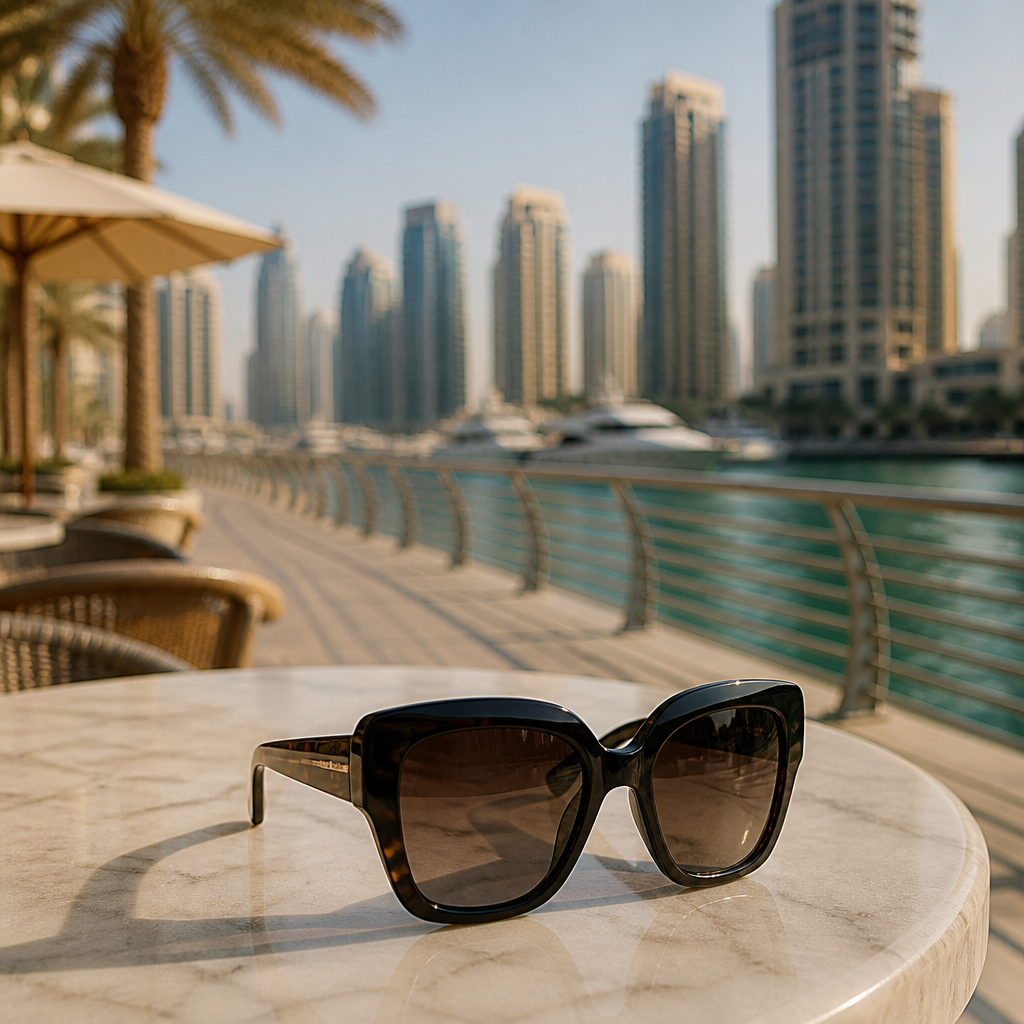
Jan Wolfs, a procurement head who has lived in Dubai since 2019, told Gulf News that he treats sunglasses as a year-round essential in sun-drenched climates. He added that in places with less sun, such as Europe, people need them far less. That contrast is the core of the argument: a city with strong sun most of the calendar year needs a different wardrobe logic than one with gray winters.
Why Winter Light Catches People Out
The cooler months are when Dubai's outdoor life peaks. Terrace brunches, evening walks along the marina, desert drives, and beach afternoons all happen when the air feels pleasant and people forget about the sun. The light, however, stays bright and low-angled, so glare off water, glass towers, and car bonnets is still intense.
In practice, the most common mistake is buying one pair for the summer and then reaching for a cheap backup in winter. That backup often has the weakest lenses in the house. Treat your sunglasses as a daily item, not a seasonal one.
Car, Commute, and Sea Exposure
Much of your daily sun exposure in Dubai happens in transit. Car glass is no substitute for sunglasses, because the glare that reaches your eyes from the road ahead and the water beside you is what causes most of the squinting. A pair kept in the car gets used on the drive home, when the sun is low and reflections are strongest.
Pro tip: Keep a second pair in the glovebox or your bag. Sea and road glare can be as strong on a mild afternoon as at midday, and a pair within reach is what makes you actually wear them.
How Dubai Street Style Uses Frames
Dubai dresses for the camera, and sunglasses are often the detail that finishes an outfit. Kathlene Fidora, a Dubai-based freelance artist and photographer, told Gulf News that she always looks for high-quality lenses with solid UV-blocking features, and that she also wants a pair that adds a stylish touch. Her view is that protection and style are not competing goals, and the best pair does both.
Oversized and Wraparound Silhouettes
Oversized frames are having a clear moment, and they also do the job best. The American Academy of Ophthalmology notes that large lenses offer the biggest shield from sun damage, and wraparound styles add protection by blocking UV that would otherwise enter from the sides. In a city of open plazas and reflective glass, that coverage is worth paying attention to.
The tradeoff is fit. A large frame that slides down the nose or sits too far from the face lets light in at the top and bottom, which undoes the benefit. Try the frame with your head tilted slightly forward, and check that the lenses stay in front of your eyes when you look down at a menu.
Metal Aviators and Round Frames for Evenings
Slim metal aviators and round frames look sharper after dark and under restaurant lighting. They usually offer less coverage than a wraparound on a bright beach, which is why we recommend them as a second pair rather than a first. Keep the lens rating in mind even when the frame looks minimal, because a delicate silhouette tells you nothing about UV performance.
A frame that looks right on a mannequin can still fail on your face if it slides, gaps at the temples, or sits too high. Fit decides whether the style works.
Brand choice shapes the mood as much as the silhouette. Ray-Ban remains a dependable choice for everyday shapes, Prada and Dior tend to make a stronger statement, and Emporio Armani and Porsche Design cover a range from polished to technical. Choose the brand for the look you want, then check the fit before you decide.
UV Protection First
Style decisions should come after one non-negotiable check: does the lens block UV? The American Academy of Ophthalmology advises looking for a sticker or tag that promises 100% UV protection from all types of UV light. Labels that say UV absorption up to 400nm are also acceptable. If a pair has no clear claim, treat its protection as unverified, however good it looks.
Lens darkness and UV protection are separate things. A very dark tint can cause your pupils to open wider, which lets more light reach the eye if the lens does not block UV. Tint is about comfort, and the label is about protection.
Reading the UV Label
Ask about the label before you ask about the price. A reputable seller should be able to tell you whether a pair carries UV protection and which standard it meets. Customers who check this first rarely regret the purchase, while those who skip it often return a pair that looks perfect but offers only partial protection.
Fidora made a point that applies here: she said affordable options can still offer great protection if you do your research. The research starts with the label, not the logo.
The Tiled Floor Test
You can check lens quality at home with a method the American Academy of Ophthalmology describes. Find something with a rectangular pattern, such as a tiled floor. Hold the glasses at a comfortable distance from your face while covering one eye, then move them slowly side to side and up and down while looking through the lenses.
If the rectangular lines stay straight, the lenses are fine. If the lines wave or wiggle, especially near the center of the lens, the lens is distorting your view and should be discarded. Run this test on every pair you buy, including gifts, because distortion is hard to notice until your eyes start tiring on a long drive.
Pro tip: Run the tiled floor test with the frame on your face, not just held flat on the counter. Lenses can look flawless in your hand and still distort once the frame is angled on your nose.
Choosing Lenses for Dubai Light
Once a pair passes the protection check, lens type decides how comfortable it feels in Dubai's glare. Wolfs told Gulf News that he looks for a good fit and polarized lenses to cut glare and boost clarity, and that his light-colored eyes make him especially sensitive to the intense UAE sun. His priorities make a useful checklist for anyone who spends much of the day outside.
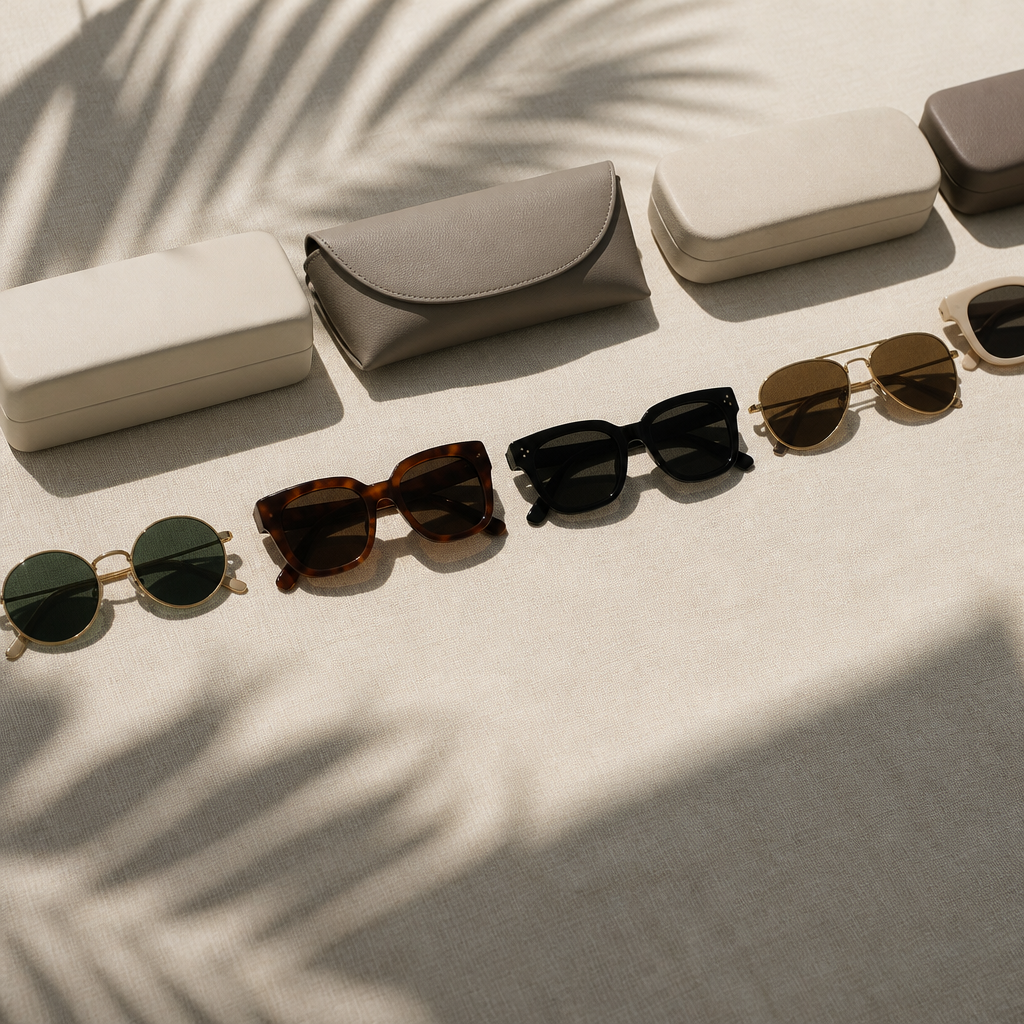
Polarized Lenses for Water and Road Glare
Polarized lenses reduce reflected glare from flat surfaces such as water, wet roads, and car bonnets. For a city with a long waterfront, coastal drives, and reflective glass towers, they are the most useful upgrade for daily wear. To test a pair, look at a phone or car screen through the lenses and tilt your head. A polarized lens will darken or show a pattern as you rotate it.
Mirrored Finishes for Bright Days
Mirrored coatings reflect more light away from the eye, which suits very bright beach and pool days. They also look striking on metal frames, which is why they are popular for statement pieces. The downside is visibility: heavily mirrored lenses can make dashboards harder to read and make a shaded café look darker than it is, so they work best as a second pair.
Gradient Lenses for Driving and Walking
Gradient lenses are darker at the top and lighter at the bottom. The top band cuts overhead sun, while the lower part keeps the road, your phone, and your steps clearly visible. We rate gradients highly for commuting, and they are often the most versatile option for people who want one pair to cover most jobs.
Buying Approaches Compared
Most Dubai shoppers choose sunglasses in one of three ways, and each suits a different lifestyle. The table below compares them on where they work best and what tends to go wrong. Our view is that the middle option, a two-pair rotation, is the one most people should aim for.
| Approach | Where It Works in Dubai | Main Drawback |
|---|---|---|
| Single all-purpose pair | Mixed days with some driving and some outdoor time | Compromises on style or lens type for at least one routine |
| Two-pair rotation | Daily city life with a separate option for evenings and events | Needs a little more storage and planning |
| Statement-only collection | Photo-heavy events and short evening outings | Often offers weaker coverage on bright, active days |
A single all-purpose pair is attractive because it is simple, but it asks one frame to handle beach days, office lunches, and evening events. The result is usually a compromise on fit or style. A statement-only collection has the opposite problem: it looks great in photos but leaves you exposed on bright, practical days.
Matching the Approach to Your Schedule
If you drive for most of your day, start with a polarized or gradient pair. If your week is mostly events and photos, begin with a statement frame, then add a practical pair as soon as you can. Be honest about your routine, because a mismatch between approach and schedule is the most common reason people stop wearing sunglasses.
Where Each Approach Breaks Down
The two-pair rotation fails in only one way: people buy a third and fourth pair that duplicate the first two. A rotation works because each pair has a distinct job. Once two pairs cover daily glare and evening style, extra purchases rarely add protection, and they usually add clutter.
Authenticity and Price
Price is where many buyers get confused. Fidora told Gulf News that expensive sunglasses often come with higher quality materials and better lenses, which can be worth it for durability. Wolfs said the market for affordable sunglasses has improved, and he now owns both expensive and budget pairs. Both views point to the same conclusion: price should reflect materials and lenses, not just the logo.
Sunglass Hub was built around a simple principle. The company sources authentic products directly from manufacturers, which removes middlemen markups from the price. That structure lets you pay for the frame and lens you are wearing, not for layers of distribution.
Spotting Counterfeits Before You Pay
Counterfeit designer eyewear is common enough that buyers should check a few things before paying. Look at the finish of the hinges, the engraving on the temples, the case, and the packaging. Compare the lens markings with the brand's standard details. If something feels rushed or cheap for a designer name, trust that feeling.
Why Price Gaps Happen
A pair that costs far less than a brand's usual price is not always a bargain. Sometimes it is an older model, sometimes a discontinued color, and sometimes it is not authentic. Ask the seller where the stock comes from and read the return policy. Our 7-day returns window gives you time to test the fit in real daylight, which tells you more than any mirror in a store. Free UAE delivery and cash-on-delivery options also let you try a pair at home before you commit.
Building a Year-Round Rotation
A year-round rotation does not need a large budget. It needs a clear role for each pair, so you reach for the right frame without thinking. Start with one everyday pair that protects well and suits most outfits, then add a second pair for the moments when style comes first.
The Everyday Pair
Your daily pair should have a verified UV label, polarized or gradient lenses, and a frame you can wear for hours. Neutral tones and medium-sized shapes are the safest choice because they work with most outfits and carry through every season. Wear this pair on the commute, at lunch, and on the beach.
The Statement Pair
Your second pair can be bolder: a sculptural acetate frame, a mirrored lens, or a metal aviator with a strong brand name. Use it for evenings, weddings, brunches, and photo days. Because it does not carry the same daily wear, you can choose it mainly for how it looks, as long as the lenses still meet the UV standard.
In practice, the rotation works best when each pair has a clear job. Confusion sets in when people buy a third and fourth pair that overlap with the first two.

Storage and Replacement
Keep both pairs in a hard case rather than loose in a bag, and wipe the lenses with a soft cloth instead of your shirt. Heat inside a parked car can warp frames and damage coatings, so do not leave them on the dashboard. Replace a pair when the lenses scratch in your line of sight, when the frame loosens, or when the UV label is no longer clear.
Shop the full range at Sunglass Hub, where you can compare authentic designer frames from Ray-Ban, Prada, Dior, Emporio Armani, and Porsche Design, with free UAE delivery and cash-on-delivery options.
Frequently Asked Questions
Do I really need sunglasses in Dubai during winter?
Yes. The UAE sun stays strong through the cooler months, and winter outdoor time, from brunches to beach walks, keeps you in bright light for many hours. UV exposure adds up over time, so a pair you wear only in summer leaves your eyes unprotected for much of the year.
What does 100% UV protection mean on a sunglasses label?
It means the lenses block UV across the range the label describes. The American Academy of Ophthalmology advises looking for a sticker or tag that promises 100% UV protection from all types of UV light, and it also accepts a label that reads UV absorption up to 400nm. If a pair has no clear label, treat its protection as unknown.
Are expensive designer sunglasses always better for my eyes?
Not always. Higher-priced pairs often use better materials and lenses, but a well-chosen affordable pair with a verified UV label can protect your eyes just as well. The protection comes from the lens, so check the label before you pay for the brand name.
Which lens type is best for driving in Dubai?
For most drivers, polarized gradient lenses are the strongest choice. Polarization cuts glare from the road and car bonnets, while the darker upper band of a gradient shields you from overhead sun. Heavily mirrored lenses can make dashboards and mirrors harder to read, so they are better for a second pair.
How can I tell whether a designer pair is authentic?
Check the hinges, engraving, case, and packaging, and compare the lens markings with the brand's standard details. Ask the seller where the stock comes from and what the return policy covers. A trustworthy seller will answer those questions clearly and will not push you into a quick purchase.
When should I replace my sunglasses?
Replace them when lenses scratch in your line of sight, when the frame loosens and no longer sits steadily, or when the UV label is unclear. Lens coatings wear over time, so a pair used daily for years may need replacing even if it still looks good.
Share your experience: which pair has become your everyday favorite in Dubai, and what did you learn the hard way before buying your first designer frame?


